

 ไทย
ไทย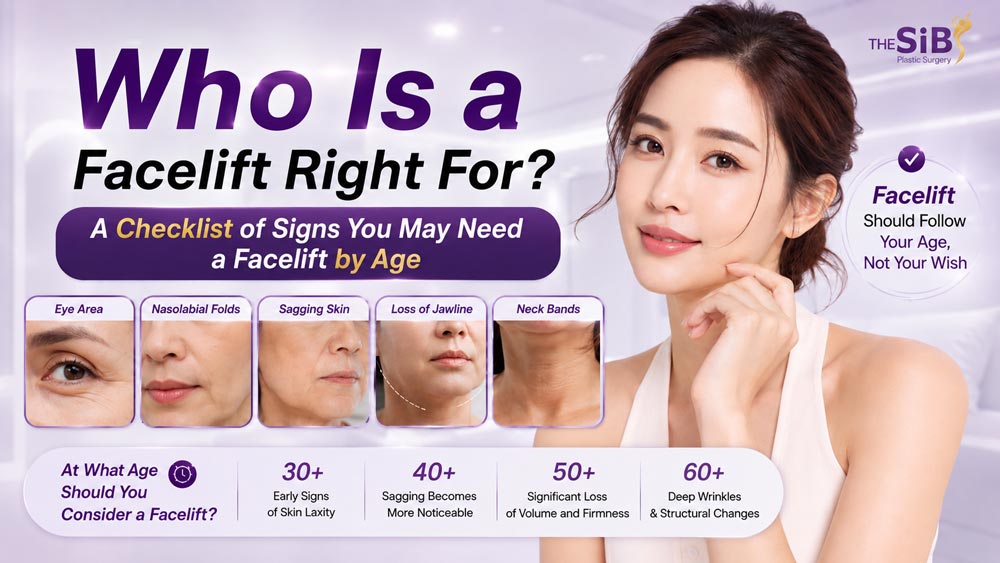
Facelift surgery is suitable for those with visibly sagging skin, such as sagging cheeks obscuring the jawline, deeply entrenched nasolabial folds and marionette lines, as well as wrinkled skin around the neck, which typically begin to appear from the age of 40 onwards. These symptoms are caused by the deterioration of the superficial musculoaponeurotic system (SMAS) and subcutaneous collagen, which cannot be corrected by non-invasive medical devices. Facelift surgery is therefore the ultimate solution to lift and reposition descended tissues back to their original placement, restoring youthfulness directly and as naturally as possible.
Key Takeaways
- Who is this for: Individuals with sagging cheek tissues, deep nasolabial folds, undefined jawlines, and those for whom non-surgical procedures are no longer effective.
- Pros and limitations: Resolves signs of aging deep into the muscle structure with results lasting longer than thread lifts, but requires allocated time for recovery and incision care.
- Recovery time: Requires about 7–14 days to rest and reduce swelling and bruising.
- Result longevity: Maintains firmness and youthfulness for approximately 5–10 years, depending on self-care.
- What to know before deciding: You should have a plastic surgeon assess your level of sagging to choose the facelift technique that best addresses your specific concerns.
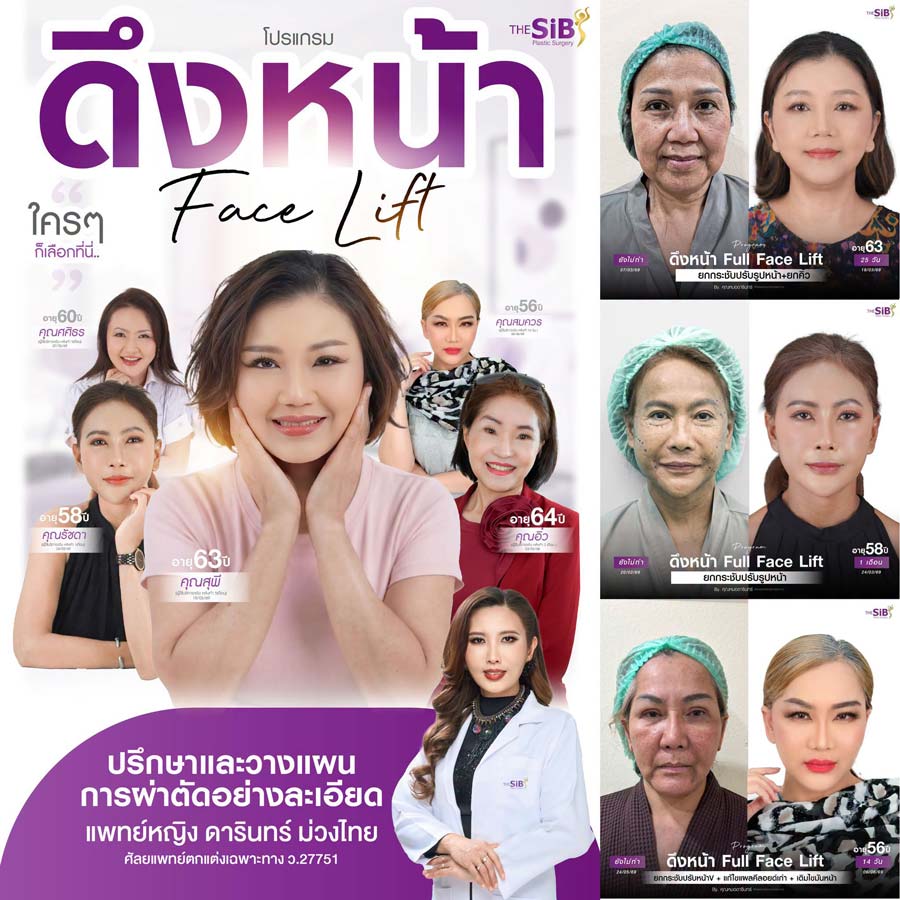
| Key Information | Details |
|---|---|
| Suitable For | Ages 40+ or those with sagging facial skin, deep nasolabial folds, and an undefined jawline |
| Surgery Duration | 1.5 – 5 hours (depending on Mini or Full Facelift technique) |
| Recovery Time | 7 – 14 days (swelling and bruising will gradually subside) |
| Result Longevity | 5 – 10 years (locks in youthfulness much longer than general procedures) |
| Key Advantages | Definitively resolves folded skin, restores a V-shape jawline, and hides scars flawlessly |
| Precautions | This is a major surgery that must be performed strictly by a specialized plastic surgeon |
What warning signs on the face indicate it’s time for a “Facelift”?
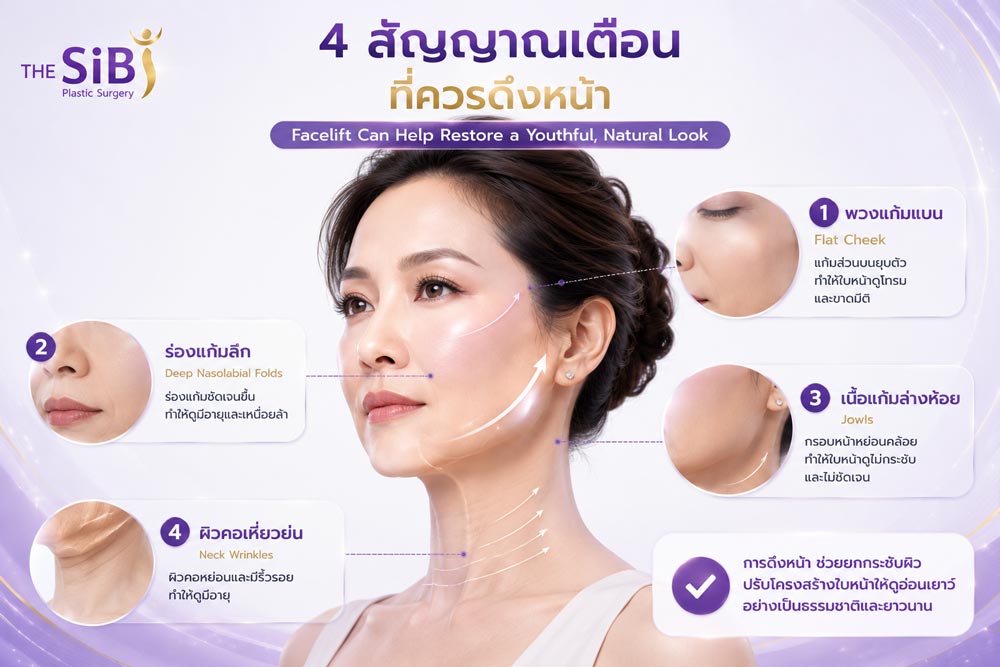
The primary warning sign is a change in face shape caused by the downward pull of tissues and fat due to gravity, such as an undefined jawline, deep nasolabial folds, and drooping marionette lines. Applying creams or using external lifting devices can no longer pull up the weight of these tissues.
Checklist of Aging Signs
- Sagging Lower Jawline (Jowls): Lower cheek tissue droops down, obscuring the jawline, transforming a once V-shaped face into a square shape or making the face look broader.
- Deeply Folded Wrinkles (Deep Folds): Nasolabial folds and marionette lines become so deep they cast shadows, making the face look stern or gloomy.
- Flattened Cheeks (Midface Flattening): Fat in the upper cheek (apple cheeks) atrophies and descends, making the midface look flat and the under-eyes appear hollow.
- Wrinkled Neck Skin (Turkey Neck): The skin under the chin and neck loses its elasticity, noticeably sagging and folding into layers when viewed from the side.
Checklist of aging signs and the appropriate facelift technique for each age group
Facial structures experience different levels of sagging at different ages. A plastic surgeon will assess the skin’s condition to select the most appropriate facelift technique, ensuring the patient undergoes minimal invasiveness while achieving targeted results.
Ages 35-45: Early Signs and Localized Sagging
- Common Issues: The lower jawline begins to lose definition, lower cheeks slightly sag, and nasolabial folds become more visible when smiling.
- Recommended Technique: Mini Facelift. Focuses on a short incision in front of the ear, lifting only the skin and lower muscle layer. Less painful, fast recovery. Ideal for those who want a sharp jawline without taking long leaves from work.
Ages 45-55+: Moderate to Severe Sagging
- Common Issues: Cheeks noticeably sag over the jawline, deep and entrenched nasolabial folds and marionette lines, widespread loss of skin collagen, and potential accompanying wrinkled neck skin.
- Recommended Technique: Full Facelift (and SMAS Facelift). The surgeon dissects the skin layer to lift and suture the SMAS muscle fascia across the entire face, covering the midface, lower face, and neck. This comprehensively resolves severe aging and provides the longest-lasting results.
Who is a facelift for? For which groups is a facelift the most worthwhile solution?
Facelift surgery is highly suitable for those who desire clear, long-lasting results and are tired of repeating anti-aging procedures every year, including those who have tried other methods that could no longer resolve their sagging.
Value Checklist
- ✔️ Those with Overfilled Syndrome: Having had too much filler to the point the face looks puffy but not lifted. A facelift helps remove excess skin and restores a sleek, beautiful face shape.
- ✔️ Those unresponsive to lifting devices: Having done HIFU or Thermage and feeling the results are lacking because the weight of the descended fat and muscle layers is too great.
- ✔️ Those wanting a transformative change: Wanting to turn back the clock and look 5-10 years younger in a single procedure.
- ✔️ Those seeking time efficiency: Willing to undergo 1-2 weeks of recovery in exchange for results that last almost a decade, eliminating the need for frequent clinic visits.

Why you should get your face shape checked and undergo a facelift at The SiB Clinic
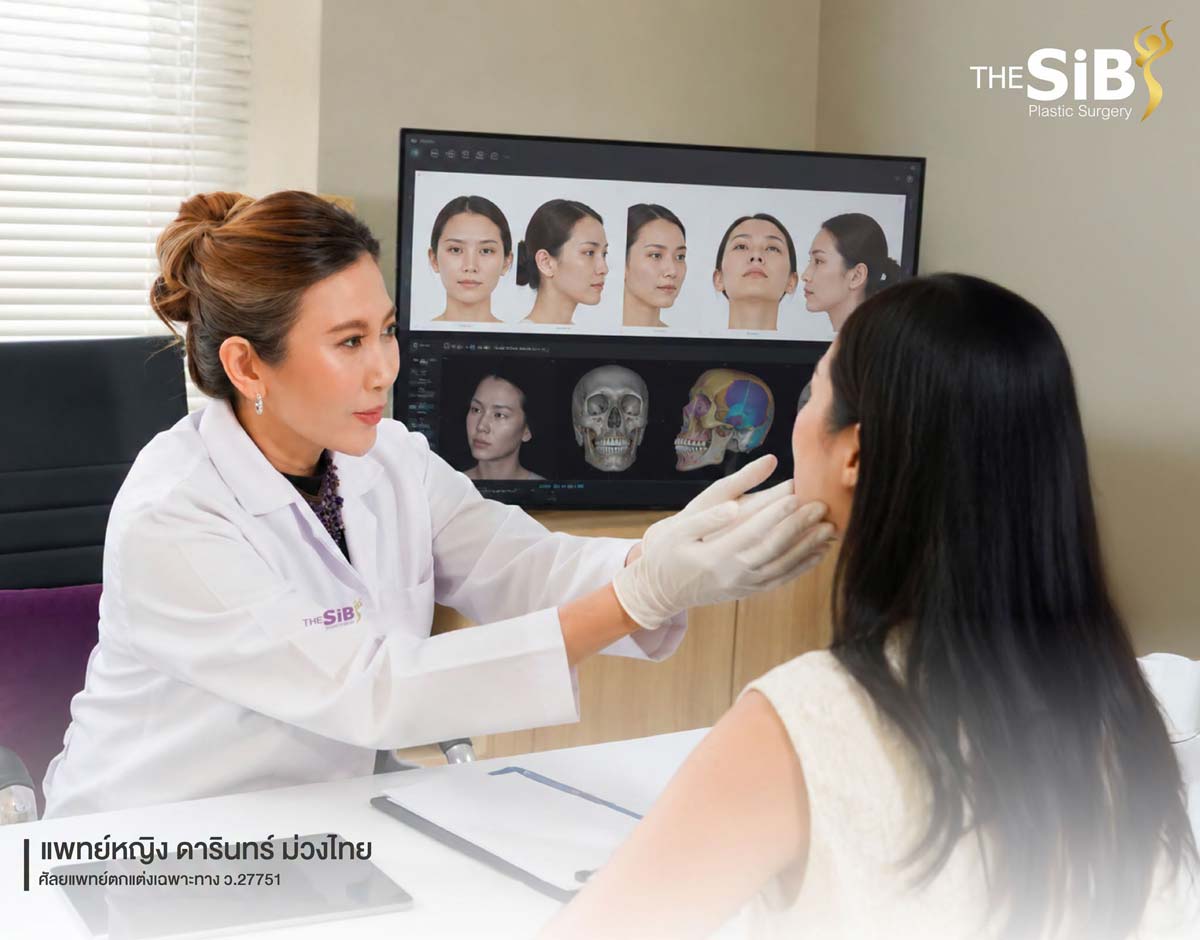
Accurate evaluation of facial structure is the starting point for perfect results. At The SiB Clinic, treatments are overseen by Dr. Darin Muangthai, a Specialized Plastic Surgeon ready to design personalized treatments to provide you with the safest and most natural youthfulness.
- Case-by-Case Analysis: Dr. Darin Muangthai assesses the skin’s thickness, fat levels, and the direction of tissue descent to select the most appropriate technique for each patient.
- Deep correction into the muscle layer (SMAS Lift): It’s not just pulling the skin tight, but rearranging the deep muscle structure. The face looks soft, can express emotions normally, and avoids an artificially tight appearance.
- Invisible Scar Technique: Incisions are designed to hide along the hairline and the natural ear creases. Once healed, they blend smoothly into the skin.
- Hospital-Level Safety: International standard sterile operating rooms, with a specialized anesthesiologist team monitoring closely throughout the surgery.
Conclusion & Recommendations
If you have the aging signs mentioned in the checklist, facelift surgery is the most worthwhile and definitive solution. It resolves sagging issues that other procedures cannot, restoring long-term confidence and a beautifully age-appropriate image.
Our Recommendation for You: Facial sagging varies in detail for each individual. We highly recommend booking an advance consultation with Dr. Darin Muangthai at The SiB Clinic for a detailed facial structure assessment and to collaboratively design a treatment plan that best meets your needs.
Frequently Asked Questions (FAQ)
In my late 30s, if my nasolabial folds are starting to deepen, should I get a facelift right away?
If the problem is just beginning, a medical assessment is recommended first. It might be more suitable for laser skin tightening. Alternatively, if cheek sagging is evident, a Mini Facelift could be a good option.
Can a facelift remove crow’s feet and forehead wrinkles?
A standard facelift focuses on the midface, lower face, and neck. To remove crow’s feet and forehead wrinkles, the doctor may recommend Botox injections or a combined Forehead Lift.
Can I get a facelift if I have diabetes and high blood pressure?
Yes, you can. However, you must take your medication and strictly control these underlying conditions to normal levels. You must also inform the plastic surgeon and anesthesiologist of your medical history beforehand for safety.
Will having had multiple thread lifts affect a facelift?
It has some minor effects. Due to potentially thick scar tissue (fascia) under the skin, the plastic surgeon must use techniques to dissect the old scar tissue before performing the facelift. Dr. Darin is highly experienced in managing these types of cases.
How long does a facelift scar take to heal and become invisible?
The incision will be completely dry and ready for stitch removal in 7-10 days. The redness will gradually fade and blend smoothly into the skin within 1-3 months.
Does a Full Facelift require general anesthesia?
Yes, general anesthesia is necessary to ensure the patient feels no pain and the surgeon can work meticulously in the deep muscle layers, monitored continuously by an anesthesiologist.
Will my facial skin become thinner and more sensitive to the sun after a facelift?
A facelift does not thin the actual skin structure. However, there may be swelling and numbness initially. It is recommended to apply sunscreen and avoid strong sunlight to prevent darkening of the scars.
Can men get facelift surgery?
Yes, and it’s becoming increasingly popular. The doctor will design the lifting vectors to maintain masculine features and flawlessly hide scars along the beard line.
When can I sleep on my side after a facelift?
For the first 1-2 weeks, it is recommended to sleep on your back with your head elevated to reduce swelling and avoid putting pressure on the wounds. Once the wounds have healed well, you can return to sleeping on your side normally.
Is there an initial fee to consult a doctor at The SiB Clinic?
There is no charge for an initial facial assessment consultation. You can contact the clinic in advance to book an appointment with Dr. Darin Muangthai.


Considering cosmetic surgery in Thailand at The SiB Plastic Surgery?
Inquire or schedule a free consultation with our doctor.
 Whatsapp
  หน้าแรก
  โปรโมชั่น
  สอบถาม
  จองคิวฟรี