

 ไทย
ไทย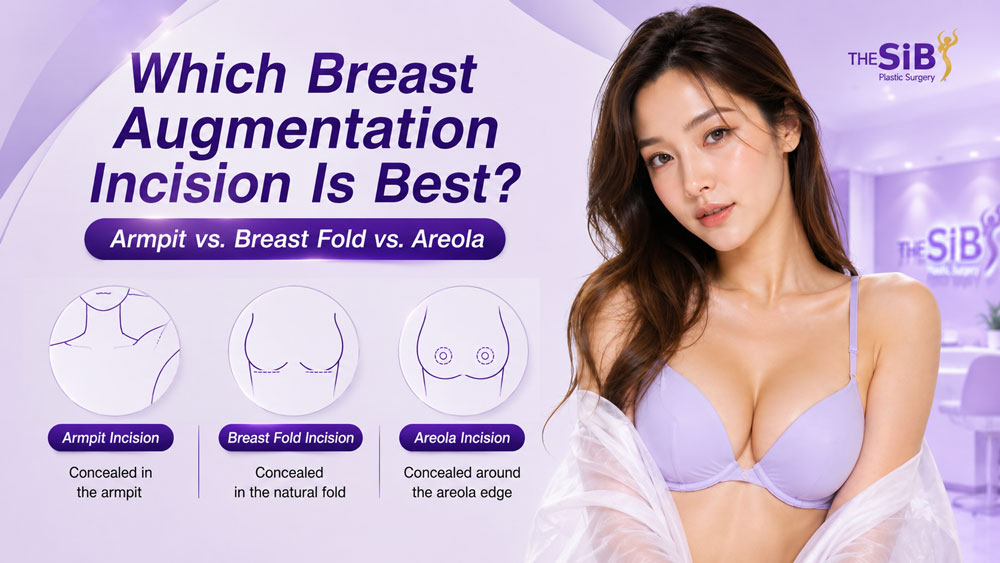
When it comes to choosing an incision placement for breast augmentation, there is no single “best” method for everyone, but rather the “method most suited to your anatomy and lifestyle.” The Inframammary Fold (under the breast crease) is the Gold Standard most highly recommended by doctors worldwide due to its safety, precision in pocket dissection, and fastest recovery time. The transaxillary (armpit) incision is ideal for those who want to conceal scars 100% away from the breast, but requires a longer recovery time for arm movement. Meanwhile, the periareolar (around the nipple) incision is generally reserved for patients with sagging breasts who require a simultaneous breast lift. The decision must be evaluated collaboratively with a specialized plastic surgeon to ensure beautiful and safe long-term results.
Key Takeaways
- Who this technique is for: Individuals planning breast augmentation who are unsure where to hide the scars to best suit their lifestyle and wardrobe choices.
- Pros and limitations: The inframammary fold involves the least pain but leaves a scar under the bikini line. The armpit incision leaves no scar on the breast but causes more pain and tightness in the arms. The periareolar incision hides the scar well but carries risks to milk ducts and nerves.
- Recovery time: Inframammary and periareolar incisions require about 5–7 days of recovery, while armpit incisions may take 10–14 days to fully regain arm mobility.
- Result longevity: Precise placement of the silicone implant from the start helps lock the breast shape beautifully for 10–15 years or more.
- What to know before deciding: If you desire large implants (400 cc and above) or specially shaped implants, the inframammary fold incision is the safest and minimizes tissue trauma best.

| Incision Placement | Inframammary Fold (Under Breast) | Transaxillary (Armpit) | Periareolar (Around Nipple) |
|---|---|---|---|
| Popularity | Highest (#1 Worldwide) | Moderate (Popular in Asia) | Niche (Breast lift/Revision cases) |
| Pocket Dissection Precision | Highest (100% clear view of structure) | Moderate (Endoscope assistance recommended) | High |
| Tissue Trauma / Pain | Least trauma, fast recovery | More tightness around arm muscles | Moderate |
| Impact on Milk Ducts/Nipples | No impact (Safe for breastfeeding) | No impact | Risk of impacting nerves/milk ducts |
| Risk of Capsular Contracture | Lowest | Moderate | Slightly higher than others (passes through milk glands) |
Deep Dive: Inframammary Fold (Under Breast Crease)
The inframammary fold incision is globally recognized as the “Gold Standard” in plastic surgery. A 3-4 cm scar is seamlessly hidden right at the natural fold beneath the breast, providing the surgeon with the clearest visual access to the breast’s internal structure.
Pros:
- Maximum Precision, 100% Hemostasis: The surgeon can directly view the breast pocket, enabling perfect muscle dissection (Dual Plane), preventing the implant from sliding sideways, and instantly stopping bleeding at any point, thus reducing the risk of post-operative hematomas.
- Minimal Pain, Fast Recovery: Since it avoids interfering with arm muscles, patients can lift their arms, perform daily activities, and drive much sooner compared to the armpit incision.
- Safe for Breastfeeding: The surgery bypasses the mammary gland tissue entirely, eliminating any risk of tearing milk ducts or causing permanent nipple numbness.
Limitations:
If the patient wears very tiny triangle bikinis or raises their arms fully, a faint scar at the breast fold might be visible (though with good care and continuous scar treatment, it blends smoothly into the skin).
Deep Dive: Transaxillary (Armpit Incision)
The armpit incision is an option for those who desire the breast area to be “completely free of surgical marks.” The scar is hidden within the natural folds of the armpit, making it ideal for those who worry about scars on their cleavage or prefer wearing deep-plunge tops without a bra.
Pros:
- No Breast Scars: All incisions are relocated to the armpit, suitable for wearing spaghetti straps or high-cut bikinis.
- Reduces Breast Keloid Concerns: For individuals with very tight skin on the chest, shifting the incision to the armpit helps reduce wound tension.
Limitations:
- Long Distance, Requires High Expertise: The distance from the armpit to the breast is significant. Without the use of an endoscope, it can lead to asymmetrical pocket dissection or a high-riding implant.
- Longer Arm Recovery: Tissues around the armpit and arm experience more trauma. Patients will feel tightness and won’t be able to fully raise their arms for the first 1-2 weeks.
- Not for Very Large Implants: If an implant larger than 400 cc is desired, pushing it through the armpit incision can tear the wound edges and cause severe bruising.

Deep Dive: Periareolar (Around the Nipple)
The periareolar incision is made along the dark border of the lower half of the areola. This technique superbly conceals the scar, blending it into the skin’s natural color transition. However, it is primarily reserved for cases with medical necessity or when structural breast correction is also needed.
Pros:
- Seamless Scar Camouflage: The color contrast between the areola and the breast skin helps mask the scar, rendering it nearly invisible.
- Ideal for Breast Lifts or Revisions: If a patient has breast sagging (ptosis) requiring a Mastopexy or wishes to reduce wide areolas, this technique allows for the removal of excess skin and implant insertion through the same single incision.
Limitations:
- Risk to Milk Ducts and Nerves: The surgery involves cutting through the mammary gland tissue, carrying a high risk of damaging sensory nerves (causing numb nipples) or affecting milk ducts for future breastfeeding.
- Higher Risk of Capsular Contracture: Opening the incision through the milk ducts makes it easier for normal flora (bacteria) to reach the implant compared to other locations.
- Not for Small Areolas: If the areola is smaller than 3 cm in diameter, there won’t be enough space to insert the implant.
Checklist: Which incision placement is best for you?
A plastic surgeon will provide recommendations based on three main factors: your original anatomy, the desired implant size, and your dressing lifestyle.
- ✔️ Choose the “Inframammary Fold” if you: Want 100% certainty in perfect shape, least pain, have a limited budget (as it doesn’t incur endoscope fees), and are getting large implants.
- ✔️ Choose the “Armpit” if you: Are a model, love wearing bikinis for photoshoots, can tolerate arm tightness for 1-2 weeks, and are willing to pay extra for endoscopic surgical techniques.
- ✔️ Choose the “Periareolar” if you: Are a post-pregnancy mother, have breasts beginning to sag, want to lift the nipples, or wish to reduce areola size simultaneously.
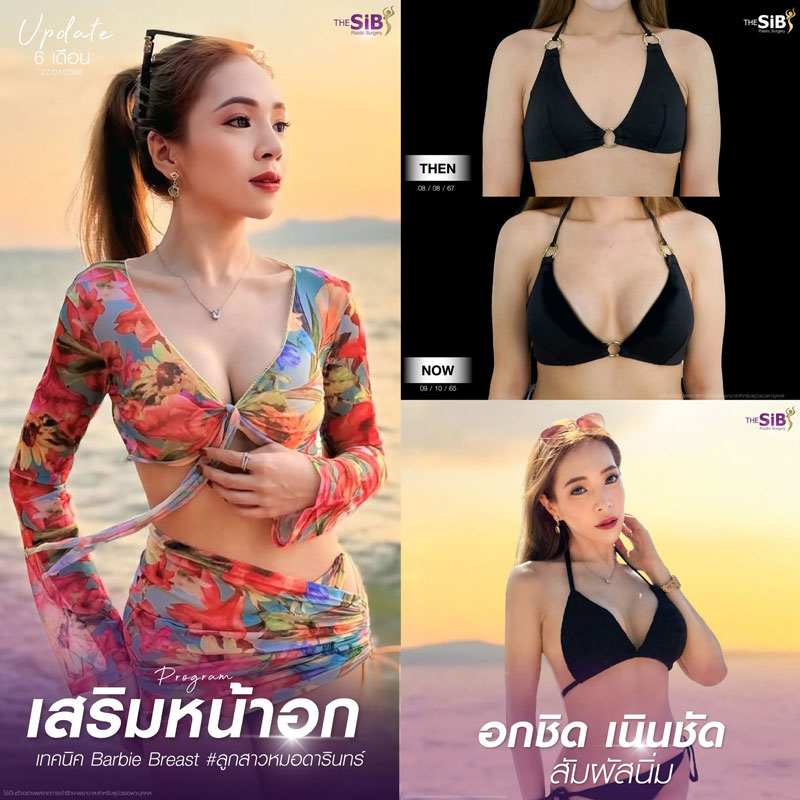
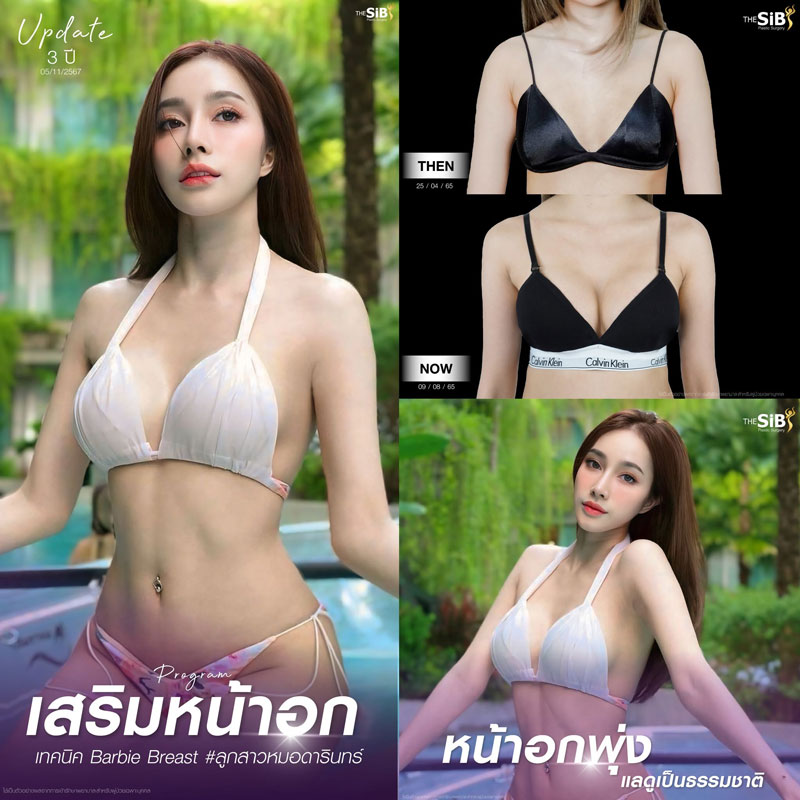
Why does Dr. Darin emphasize hidden scar techniques at The SiB Clinic?
At The SiB Clinic, we believe the most beautiful breasts are those that look natural, without tension-pulling scars ruining your confidence. Dr. Darin Muangthai, a specialized plastic surgeon with over 20 years of experience, values the “suturing technique” as highly as selecting the implant size.
- Honest Pre-op Analysis: The doctor evaluates your inframammary fold. If the crease is distinct, the under-breast incision will be 100% hidden, even when raising your arms.
- Tension-Free Suturing Technique: Dr. Darin uses ultra-fine absorbable sutures, burying all knots beneath the skin (no painful stitch removal required). Suturing without placing tension on the outer skin is key to preventing keloids or widened scars.
- Flawless Hemostasis with Special Techniques: Managing the breast pocket via Bloodless Surgery ensures patients experience almost no bruising, eliminates the need for cumbersome surgical drains, and allows for rapid wound drying.
- Highest Level of Safety: Regardless of the incision chosen, the surgery is performed in hospital-standard sterile operating rooms, with a 1:1 anesthesiologist providing continuous care.
Conclusion & Recommendations
All three breast augmentation incision locations have distinct pros and limitations. The inframammary fold represents the most cost-effective and lowest-risk investment (High Safety ROI), while the armpit and periareolar options perfectly cater to specific lifestyles. Ultimately, the pocket dissection and hidden scar suturing skills of a specialized surgeon dictate how beautiful and seamless your breasts will be.
Our Recommendation for You: Everyone’s inframammary fold, areola width, and skin tension are unique. We recommend booking an advance consultation with Dr. Darin Muangthai at The SiB Clinic for an in-person physical examination to receive advice on the safest and most suitable incision location for your body structure.

Frequently Asked Questions (FAQ)
Will an inframammary fold incision be very visible?
It will appear as a red line during the first 1-3 months. However, if the patient has a distinct breast fold, the scar sits perfectly hidden within it. Over 6-12 months, the scar fades to smooth white, blending into the skin, making it very hard to notice.
I want an armpit incision but fear being unable to lift my arms for long. Should I do it?
Arm tightness only occurs during the first 7-14 days. If you truly want to hide scars from the breast 100%, the armpit incision is ideal. Just ensure you can take leave from work or pause activities requiring heavy arm use for the first 2 weeks.
Is there a risk of hitting lymph nodes with an armpit incision?
A specialized plastic surgeon is thoroughly familiar with the anatomy and will dissect under the breast fascia layer without interfering with the lymph nodes in the upper armpit, ensuring high safety.
If I have very light-colored areolas, will a periareolar incision leave a visible scar?
Whether a periareolar scar is visible depends on the crispness of the color border. If your areolas are light with blurred edges, the doctor might recommend the inframammary fold instead for a smoother result.
Which incision has the lowest chance of capsular contracture?
The inframammary fold has the lowest rate of capsular contracture. It avoids milk ducts (which can harbor bacteria) and allows the surgeon to clean the breast pocket most thoroughly.
Which incision is best for inserting very large implants (e.g., 400 cc or more)?
The inframammary fold is best. The incision opening can flex to accommodate large implants without bruising or tearing the wound edges, unlike the limited space of the armpit or areola.
I heal slowly and am prone to keloids. Which incision should I choose?
The inframammary fold is recommended, combined with Dr. Darin’s tension-free buried knot suturing technique. Post-surgery, consistent use of Silicone Sheets to compress the scar is necessary to prevent keloids.
If I need to remove the implant in the future, can the same incision be used?
Yes, it can. The plastic surgeon will cut along the original scar line to avoid creating a new, additional scar on the body.
Does an inframammary fold incision require surgical drains?
At The SiB Clinic, Dr. Darin employs precise, Bloodless Surgery techniques for pocket dissection. Consequently, most patients “do not need drains,” allowing them to go home comfortably without carrying blood bags.
Is there a consultation fee to discuss scars and try on sizes?
There is no charge for the initial consultation. The clinic gladly provides honest physical assessments and evaluations of the breast fold. Please contact us to book an appointment in advance.


Considering cosmetic surgery in Thailand at The SiB Plastic Surgery?
Inquire or schedule a free consultation with our doctor.
 Whatsapp
  หน้าแรก
  โปรโมชั่น
  สอบถาม
  จองคิวฟรี