

 ไทย
ไทย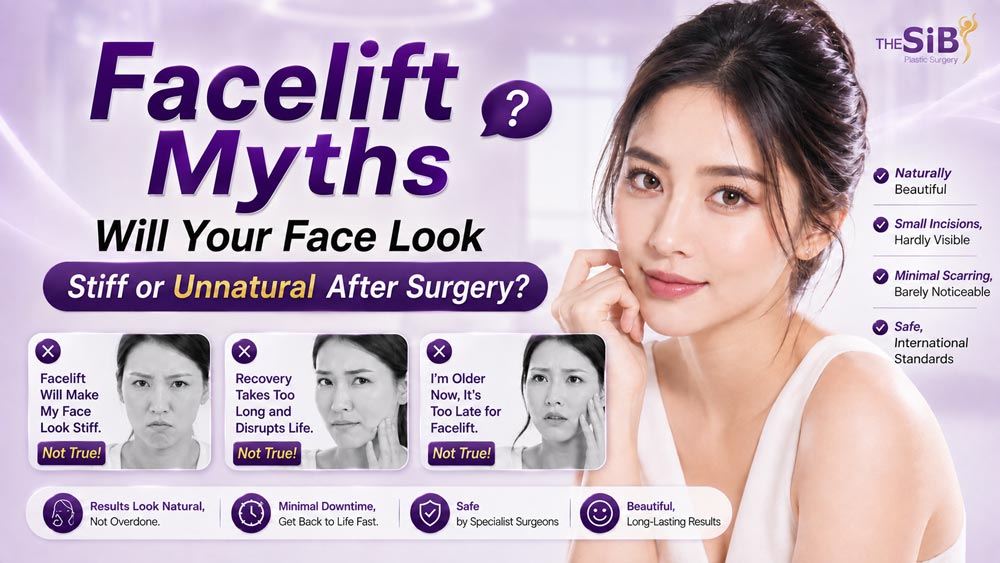
Modern facelift surgery does not make the face look stiff, tight, or artificial when performed correctly by a specialized plastic surgeon. The problem of a stiff face or a “Windblown Look” usually stems from outdated techniques that pulled only the skin layer tightly. However, modern facelifts involve lifting and tightening the deep muscle layer (SMAS). This relieves the outer skin of any tension, allowing you to smile, laugh, and express emotions 100% naturally while perfectly preserving your unique facial beauty.
Key Takeaways
- Who this article is for: Individuals interested in a facelift but concerned about their face changing, looking flat, or appearing unnaturally stiff.
- Pros and limitations: The SMAS facelift technique excellently preserves naturalness and facial dimension. However, during the first 1-3 months, there may be temporary tightness due to the body’s natural swelling reduction process.
- Recovery time: Facial tightness, restricted mouth corners, or deep tight sensations will gradually relax and soften back to normal entering the 2nd month onwards.
- Result longevity: Locks in a natural, youthful appearance without a frozen look for a long-lasting 5-10 years.
- What to know before deciding: A puffy, stiff face that struggles to smile fully nowadays is mostly caused by excessive filler injections (Overfilled Syndrome) rather than a properly performed facelift technique.

| Myths | Medical Facts |
|---|---|
| A facelift will make you unable to smile; your face will be stiff. | You can smile and express emotions normally because the muscles are not destroyed. |
| Your eyes will be wide open and the outer corners pulled up. | A good technique designs lifting vectors that align with the bone structure, preventing slanted eyes. |
| The face will look flat without cheek dimension. | Muscle lifting pushes the cheeks back up, restoring full, youthful dimension. |
| Thread lifts/fillers look more natural than a facelift. | For people with severe sagging, packing in fillers actually makes the face look unnaturally puffy and stiff. |
| The skin will become so thin that veins are visible. | A facelift does not destroy the skin’s thickness, so the skin does not become thinner. |
| Scars will turn into large keloids that pull on the ears. | Tension-free suturing allows the scars to heal smoothly into the natural ear creases. |
Myth 1: “A facelift will make you completely tight, preventing a full smile”
This belief stems from surgical techniques of the past. With modern facelift techniques, the inability to smile fully or the tight feeling around the cheeks is merely a temporary condition caused by swelling during the first 1-3 months. Once internal tissues heal and swelling fully subsides, the muscles will return to normal movement and expression 100%.
- Temporary Tightness: Post-surgery, the body’s natural mechanism produces fluids and lymphatic swelling, causing patients to feel facial tightness, difficulty smiling, or restricted mouth movement. This is a normal reaction of the body repairing itself, not a surgical error.
- Expression muscles remain intact: A specialized plastic surgeon carefully dissects the skin layers without cutting or damaging the facial nerves that control movement. Your smile will always remain your own.
- Correct layer lifting: All the tension is transferred to the deep muscle fascia. The outer skin is merely laid down gently, preventing it from being over-stretched, thinning, or losing elasticity.
Myth 2: “The face will look strange, like a Windblown Look”
Problems like a deformed face, a stretched mouth, slanted eyes, or a flat, windblown appearance usually result from miscalculated lifting vectors or outdated techniques that only pull the upper skin layer (Skin-only Facelift). If performed by a highly skilled specialist, these problems will definitely not occur.
- What causes the Windblown Look?: It’s caused by pulling the skin too horizontally (towards the back of the ear), resulting in flat cheeks, a widened mouth, and wide-open eyes. This is an error in vector placement.
- New Vertical Lift technique: Modern surgeons lift tissues vertically against gravity (diagonally upwards), following the direction tissues naturally drop. This returns the cheeks to their original, full position, providing beautiful, natural dimension.
- Preserving individual identity: A good facelift doesn’t aim for maximum tightness; it aims to make your face look youthful—like you did 10 years ago—while preserving your original facial frame and proportions.
Myth 3: “Thread lifts or fillers provide a more natural result”
For younger patients, thread lifts or fillers can provide excellent natural results. However, in older patients with significant sagging, attempting to use massive amounts of filler to support drooping skin will make the face look puffy, stiff, and unnatural (Overfilled Syndrome).
- Pillow Face from fillers: When there is an excess of sagging skin, injecting fillers in hopes of tightening it expands the face laterally, making it look swollen. When smiling, it appears as hard, unnatural lumps.
- Facelifts solve the root cause: Surgery literally “cuts away excess, loose skin” and repositions dropped tissue back to its original place, resulting in a slimmer, more natural face shape compared to pumping liquid under the skin.
- The solution for revision cases: Many patients whose faces look stiff from excessive non-surgical treatments end up getting a facelift to remove the excess filler and skin, restoring softness to their face.
How does the SMAS Facelift technique help the face look soft and natural?
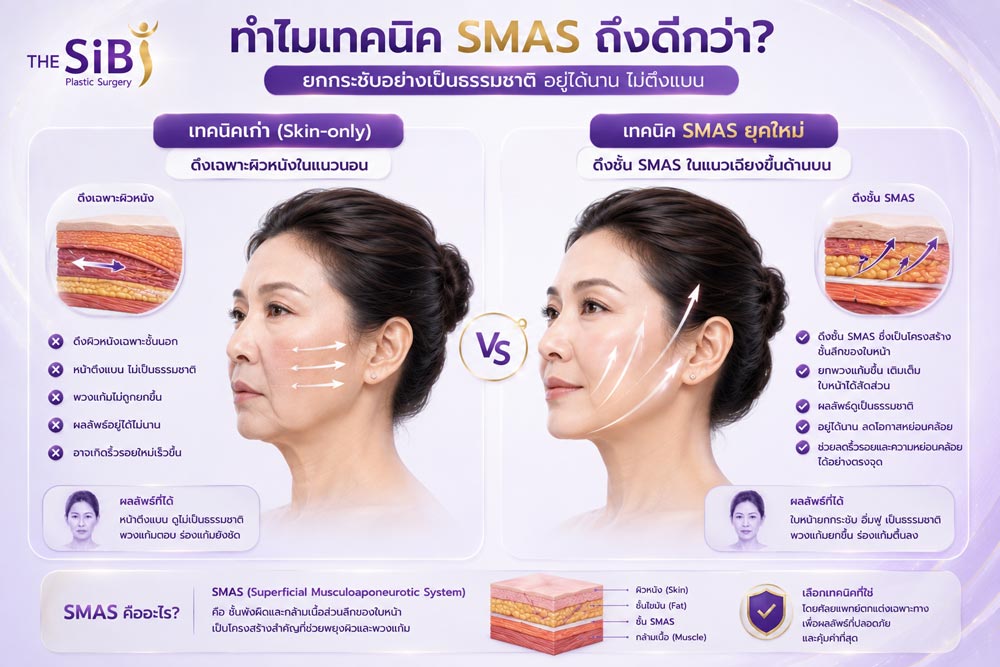
The SMAS Facelift technique addresses the Superficial Musculoaponeurotic System, which is the primary foundation supporting facial fat and skin. When this lower foundation is pulled tight, strengthened, and aligned correctly, the upper skin experiences no stress, allowing the face to move softly without being frozen.
- ✔️ Core tightening: The surgeon folds, pulls, or sutures the SMAS layer tightly. This layer is much tougher and stronger than skin, so it bears the lifting tension excellently.
- ✔️ Tension-Free Closure: Since the SMAS layer takes all the tension, the outer epidermis is sutured closed as gently as possible. This ensures smooth scars, prevents widened keloids, and avoids pulling the earlobes out of shape.
- ✔️ Maintaining skin elasticity: Because the skin isn’t stretched to its absolute limit, pores don’t widen. The skin retains its elasticity and responds to emotional expressions normally.
Why can you trust the Natural Look results of a facelift at The SiB Clinic?
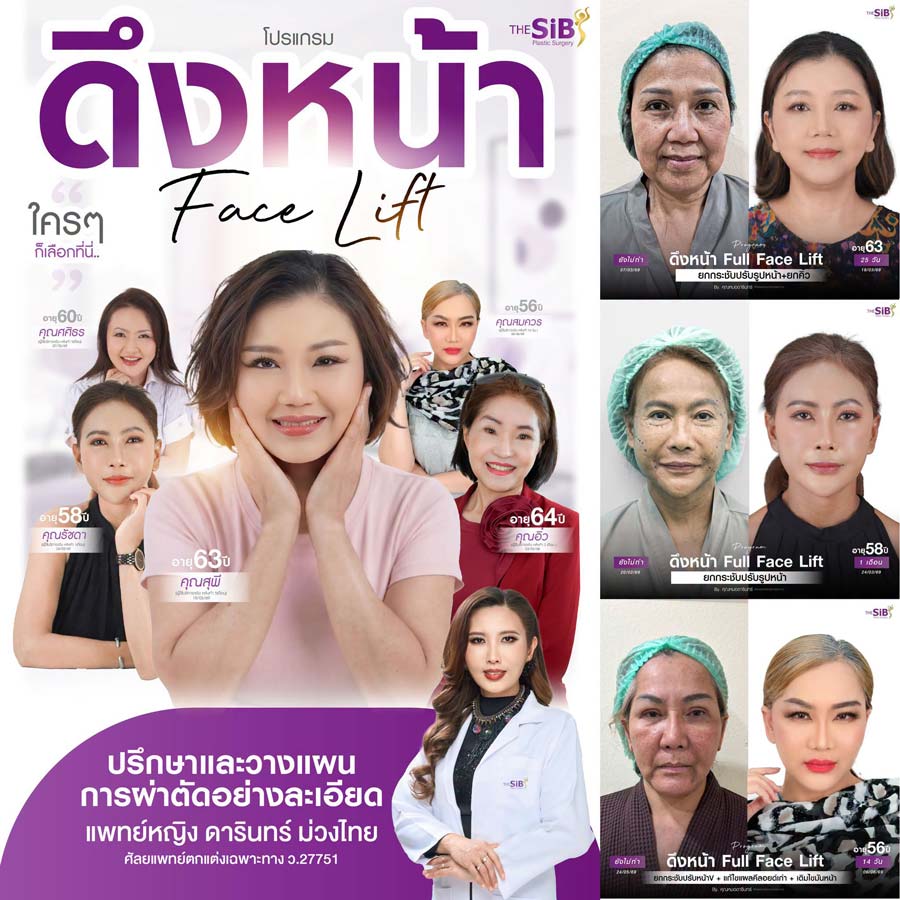
At The SiB Clinic, procedures are overseen by Dr. Darin Muangthai, a Specialized Plastic Surgeon who operates on the philosophy that “the best surgery is one where people can’t tell what you’ve had done, but simply compliment you on looking more beautiful and younger.” We meticulously design lifting vectors on a case-by-case basis to preserve your unique beauty.
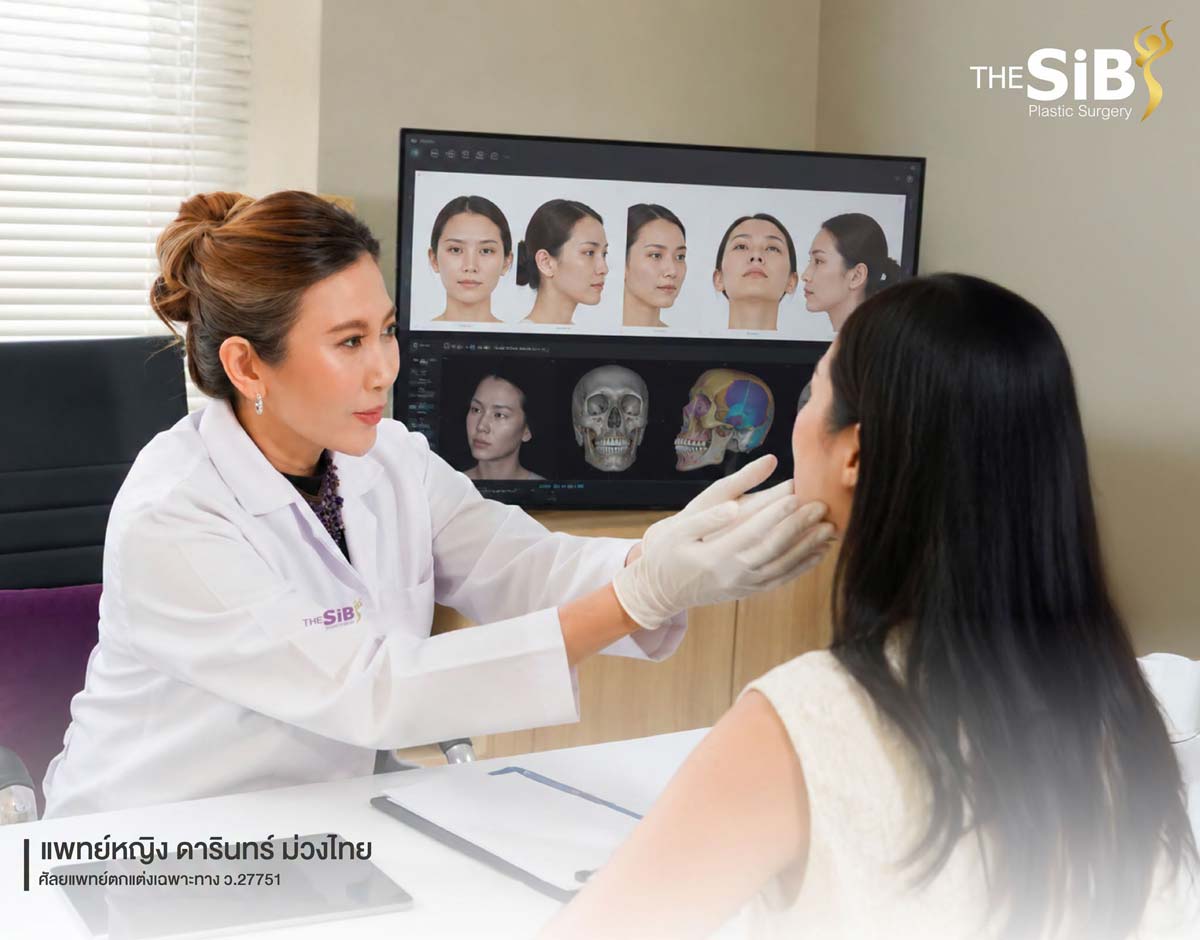
- In-depth structural analysis: Dr. Darin evaluates bone structure, fat thickness, and the patient’s emotional expression pathways before surgery to ensure symmetrical and highly human-like movement.
- Specialized hidden scar technique: Expertise in suturing scars hidden along ear creases and the hairline makes them blend with natural skin. Patients can confidently tie their hair up or wear open hairstyles.
- Maximum safety level: International standard sterile operating rooms, with a 1:1 anesthesiologist team ensuring the patient’s muscles are fully relaxed during surgery, reducing tissue trauma.
- Close follow-up care: We offer post-op programs with lasers and treatments to reduce swelling, helping the period of tightness pass quickly.
Conclusion and Recommendations
The belief that a facelift leaves the face stiff and unable to smile is a misunderstanding stemming from outdated technologies and techniques. A modern facelift (SMAS Facelift) performed by a specialized plastic surgeon is a rejuvenating procedure that yields the most natural and visually pleasing results, helping you look bright and youthful while still being able to laugh and express yourself fully.
Our Recommendation for You: If you are concerned about unnatural results, we recommend booking a consultation with Dr. Darin Muangthai at The SiB Clinic to request video reviews. This will allow you to see the actual movement, smiling, and emotional expressions of real patients post-surgery, boosting your confidence before making a decision.
Frequently Asked Questions (FAQ)
Why does the face feel stiff and tight initially after a facelift?
This is caused by natural lymphatic swelling and tissue inflammation post-surgery (Swelling & Edema). The body feels tight and movement is restricted, which gradually improves as the swelling goes down.
When will the tight face and restricted smile return to normal?
Generally, the noticeable tight sensation will gradually relax in the first 2-4 weeks. The face will return to being soft and able to smile fully and normally around the 2nd to 3rd month onwards.
Will my smile change after a facelift?
No, it will not. If performed correctly, the nerves and muscles used for expressing emotions are not damaged. Your smile will remain as charming as ever.
Is it true a facelift makes cheeks look flat with no dimension?
Not true. The SMAS technique helps lift fallen cheek tissue back onto the cheekbones (apple cheeks), giving the face a plump, dimensional, and youthful appearance.
During recovery, feeling hard lumps under the skin on the cheeks, is this abnormal?
This is normal. The hard lumps are part of the internal tissue repair and scar healing process (Scar Tissue Healing). They will gradually soften and blend with normal skin in about 3-6 months.
Why do some celebrities look artificial or have overly slanted eyes after a facelift?
This often results from miscalculated lifting vectors, pulling the upper skin too tight, or undergoing repeated facelifts until the skin loses its elasticity. Choosing a skilled specialist prevents this problem.
If the face is stiff from too much filler, can a facelift help?
It helps and is the best solution. A facelift removes the puffy, excess skin and reconstructs the foundation, restoring a slim, beautiful, and more natural face compared to layers of injected filler.
How does the hidden scar suturing technique make the face look more natural?
When the wound isn’t stretched wide (Tension-free), the junction between the facial skin and the ear edge looks natural. It prevents wrinkles in front of the ear and avoids pulling the earlobe down into an unnatural point (Pixie Ear).
Will a facelift make a man’s face look too feminine/sweet?
No. The surgeon will design lifting vectors specifically for men to maintain a sharp, strong jawline, preserve masculinity, and seamlessly hide scars along the beard line.
Afraid of changing into a different person, what should I tell the doctor?
You can bring photos of yourself in your 30s or 40s to show Dr. Darin during your consultation. This allows the doctor to design the rejuvenation to closely match your original facial structure.


Considering cosmetic surgery in Thailand at The SiB Plastic Surgery?
Inquire or schedule a free consultation with our doctor.
 Whatsapp
  หน้าแรก
  โปรโมชั่น
  สอบถาม
  จองคิวฟรี