

 ไทย
ไทย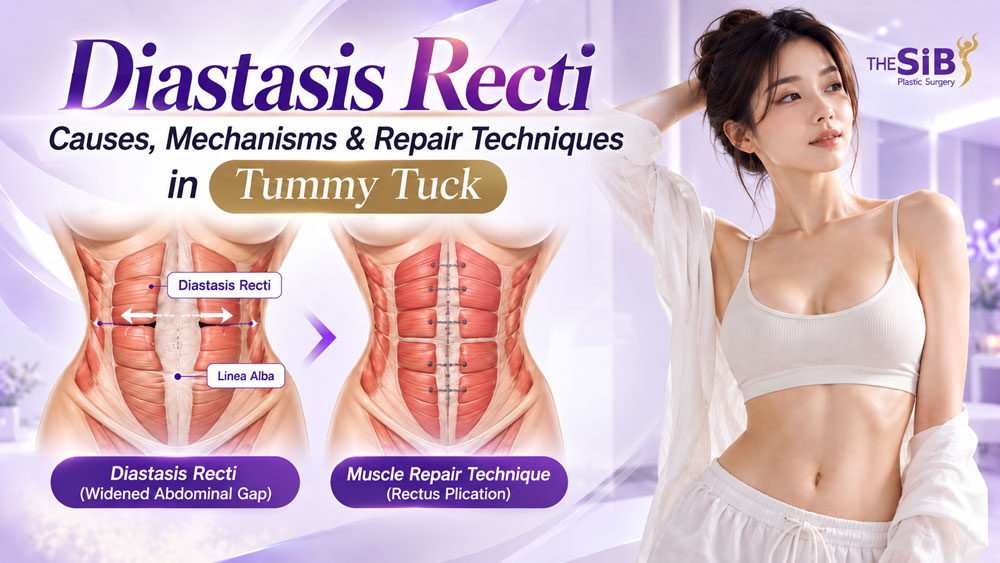
“Exercising hard and dieting until my weight is normal, but why is my belly still bulging, especially around the navel?” This is one of the most common clinical problems encountered among postpartum women and those who have lost a significant amount of weight. Many try to solve this problem by training their core muscles, only to find that their abdomen doesn’t flatten. Worse still, some might notice a long, bulging ridge down the middle of their abdomen when flexing. If it’s not due to stubborn “fat accumulation” that resists weight loss, what’s pushing the abdomen out is an underlying structural failure.
Key Takeaways
- A bulging abdomen that cannot be reduced by exercise is often primarily caused by a structural failure known as Diastasis Recti.
- When the fascia (Linea Alba) between the abdominal muscles is stretched beyond its limit, exercise cannot cause this tissue to contract and heal back together.
- A surgeon will perform a Layered Assessment of the abdominal wall to differentiate between fat, skin, and muscle structure issues.
- The medical gold standard treatment for this condition is Abdominoplasty (Tummy Tuck) combined with a Rectus Plication technique to suture, repair, and restore the abdominal wall’s strength.
What is Diastasis Recti?
A common misconception is that a bulging abdomen is caused solely by sagging skin and fat, leading patients to focus on Liposuction. However, this method cannot solve the problem if the root cause is “Diastasis Recti” (abdominal muscle separation).
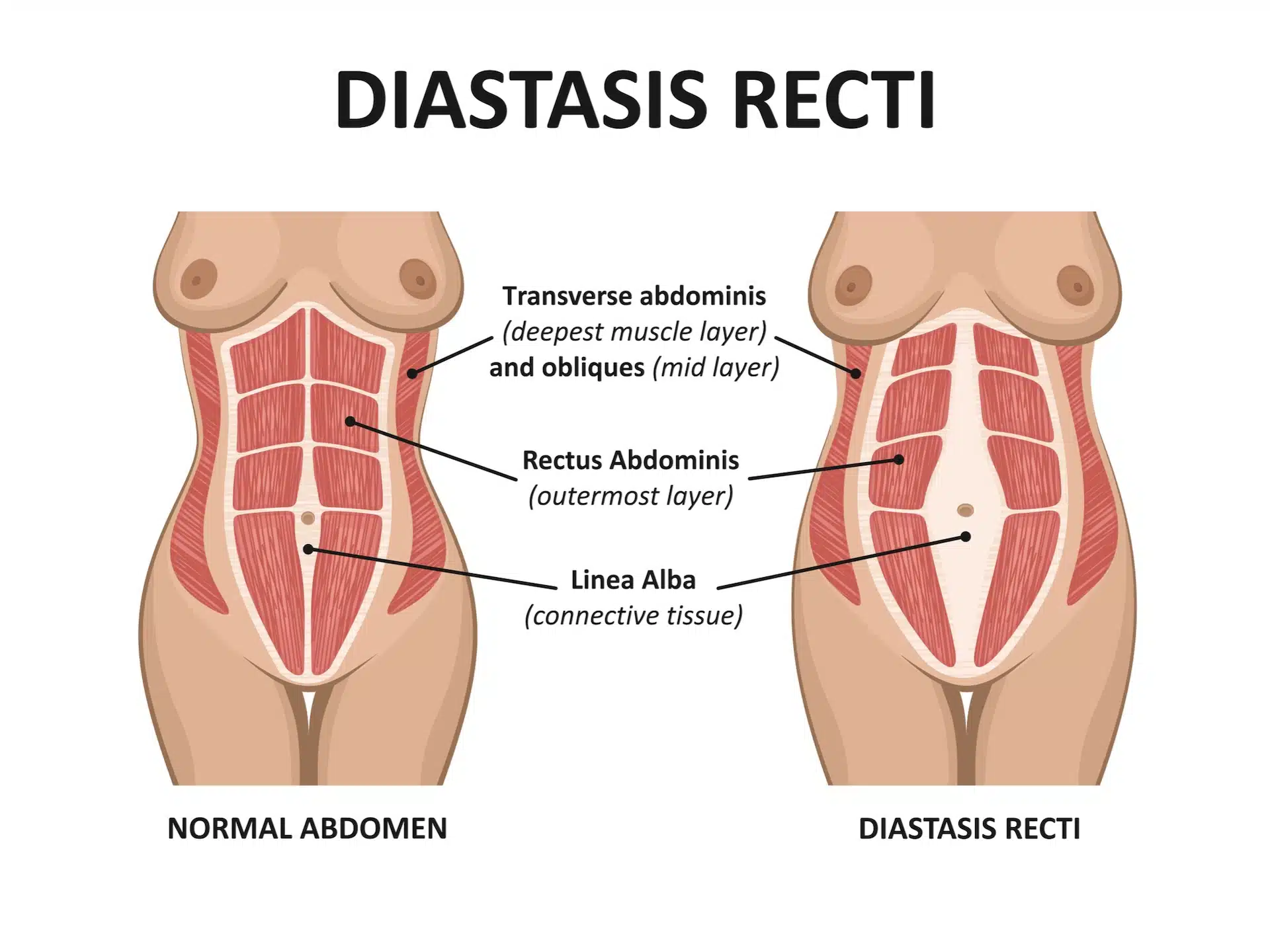
Anatomically, the long abdominal muscles (Rectus Abdominis) on both the left and right sides are joined in the center by a band of connective tissue (fascia) called the Linea Alba. During pregnancy as the baby grows, or during rapid weight gain, Intra-abdominal pressure pushes the two muscle halves apart, stretching the Linea Alba.
When this fascia is stretched beyond its maximum elastic limit, it loses its ability to contract back to its original state, becoming a thin, loose sheet of fascia. The result is that the abdominal wall loses its tension. Internal abdominal organs then push against this weakened wall, causing it to bulge forward, creating the clinical appearance of a “protruding abdomen.”
Clinical Assessment Before Considering Treatment
Accurate treatment begins with an accurate assessment. A plastic surgeon will not just look at the amount of excess skin or fat but must evaluate the structure thoroughly as follows:
- ✔️ Measuring Inter-rectus Distance: Evaluating the width between the abdominal muscles while the patient flexes, at locations above, at, and below the navel, to determine the level of severity.
- ✔️ Evaluating Abdominal Wall Strength: Checking for commonly associated hernias, such as an Umbilical hernia, which is a reflection of fascial weakness.
- ✔️ Assessing Fat Type: It’s crucial to clearly differentiate between Subcutaneous fat, which can be excised or suctioned out, and Visceral fat, which lies beneath the muscle layer and cannot be removed surgically.
- ✔ Skin Laxity: Analyzing this in conjunction with muscle structure to determine the extent to which excess abdominal skin excision is necessary.
Treatment Options and the Rectus Plication Technique in a Tummy Tuck
If the muscle separation is minimal, conservative treatment involving physical therapy focused on training the deep core muscles might help improve abdominal wall control. However, in severe cases where the fascia is torn or permanently stretched, the standard medical treatment is Abdominoplasty (Tummy Tuck).
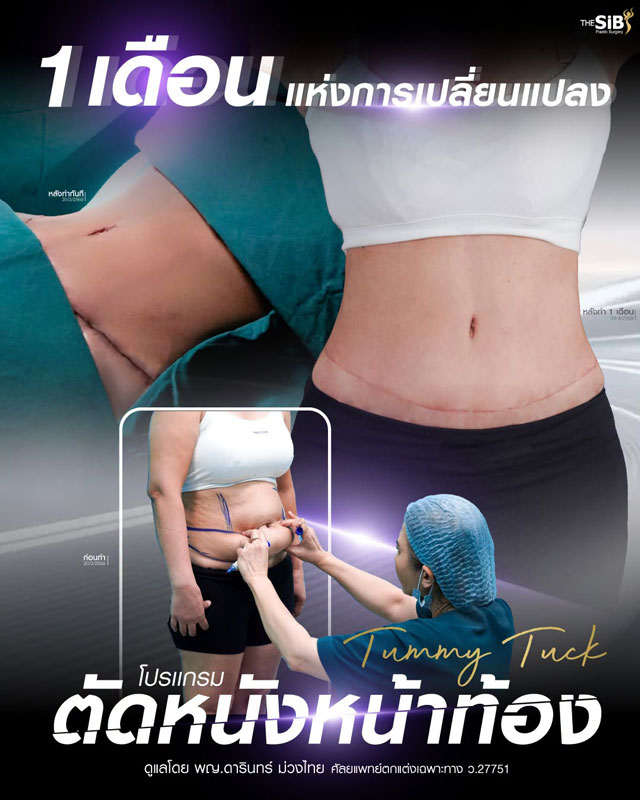
The core of this procedure is not just removing excess skin; it is the Rectus Plication (abdominal muscle repair suturing) technique. The surgeon will fold and suture the loose Linea Alba fascia together using highly durable sutures to pull the left and right muscles close together. This mechanism acts as an “Internal Corset,” restoring the abdominal wall to be tight, flat, and fully capable of protecting internal organs once again.
Factors to Consider and Limitations (Decision Framework & Trade-offs)
The decision to undergo a Tummy Tuck with muscle repair always involves clinical factors and trade-offs that the patient must understand beforehand:
- ⚠️ Future Pregnancy Plans: If the patient still plans to get pregnant, surgeons usually recommend delaying the surgery, as the expansion of a new pregnancy will destroy the recently repaired structure.
- ⚠️ Visceral Fat Volume: If a patient has high visceral fat, the surgeon cannot suture the muscles very tightly, as the fat will push from the inside, causing Intra-abdominal hypertension. This affects the respiratory and circulatory systems. Weight loss before surgery is essential for this group of patients.
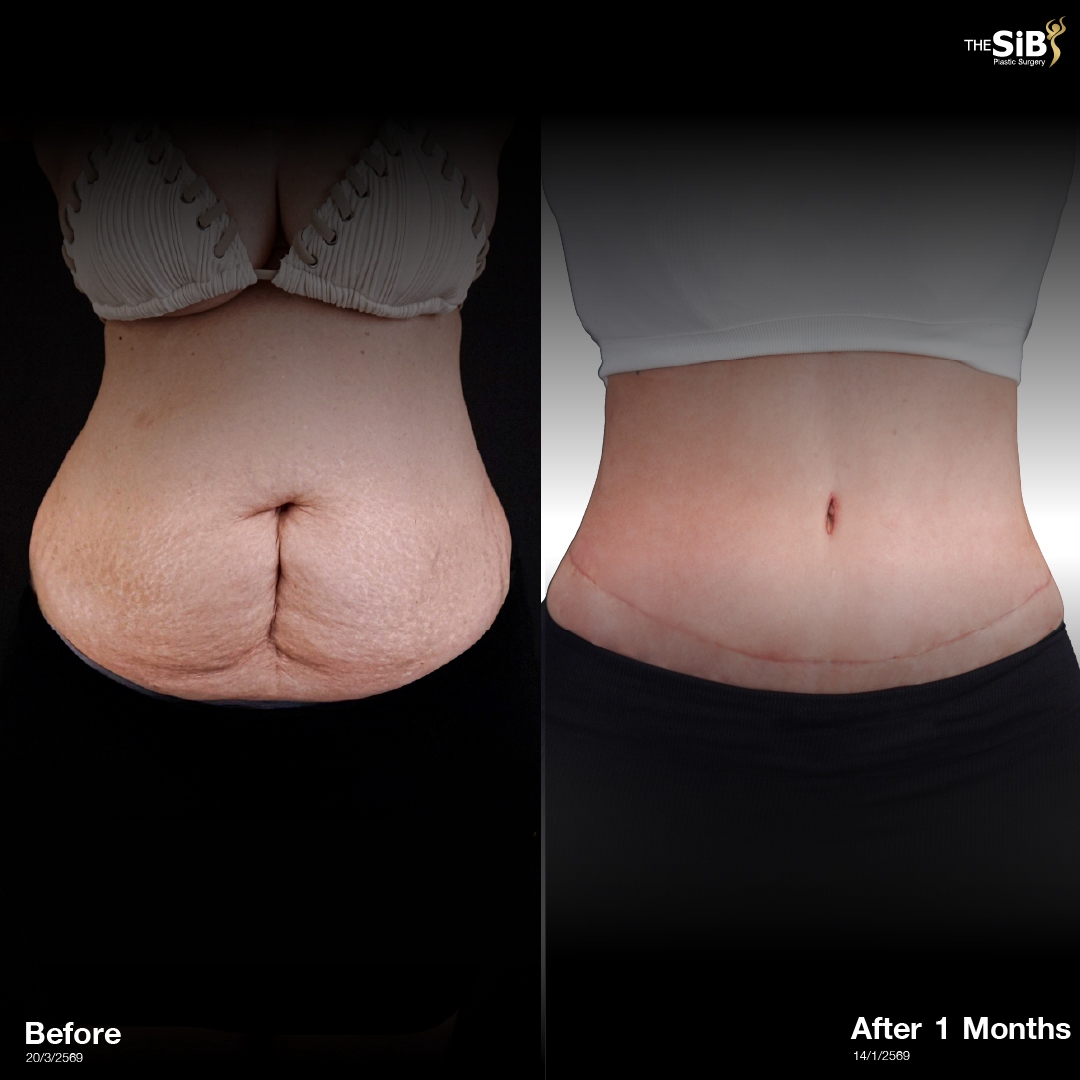
- ⚠️ Recovery Time and Scars: The patient gains a strong, flat abdominal structure in exchange for a long scar hidden under the bikini line. Furthermore, repairing the muscles makes the recovery process longer and more painful/tight compared to just skin excision alone.
Reconstructive Aesthetic Concept by The SiB
From the perspective of The SiB Plastic Surgery, abdominal plastic surgery is not merely “cutting away saggy skin,” but a Reconstructive Aesthetic process that focuses on restoring structure alongside exterior beauty.
Performing Rectus Plication requires a profound understanding of Tension Dynamics. The surgeon must calculate the Optimal Balance between pulling the muscles as close as possible for flatness and maintaining comfortable, natural breathing and movement. A good structural repair must deliver both beautiful proportions and restore core muscle stability to the patient simultaneously.
Frequently Asked Questions (FAQ)
Can people who have never been pregnant develop Diastasis Recti?
Yes. This condition can occur in individuals who have experienced rapid weight gain followed by drastic weight loss, or those who have had central obesity for a long time, causing intra-abdominal pressure to stretch the central fascia. It can also occur in individuals who lift heavy objects with incorrect posture over an extended period.
Do sit-ups help reduce Diastasis Recti?
No, they don’t, and they might even make it worse. Sit-ups or crunches increase intra-abdominal pressure and push the weakened fascia outward even more. If you want to exercise, you should avoid movements that directly flex the abdomen and focus instead on engaging the deep core muscles (Transversus Abdominis).
If I only have muscle separation but no sagging abdominal skin, do I still need a Tummy Tuck with a long scar?
This depends on the doctor’s assessment. If the skin’s elasticity is still good and there is absolutely no excess skin, the surgeon might consider other options, such as Endoscopic plication or a Mini Tummy Tuck. However, this scenario is relatively rare clinically.


Considering cosmetic surgery in Thailand at The SiB Plastic Surgery?
Inquire or schedule a free consultation with our doctor.
 Whatsapp
  หน้าแรก
  โปรโมชั่น
  สอบถาม
  จองคิวฟรี