

 ไทย
ไทย
Is breast augmentation dangerous? In reality, it is not dangerous to the body and is highly safe if performed by a “Specialized Plastic Surgeon” in an internationally standardized medical facility, using silicone implants certified by the FDA. Headline-making risks like capsular contracture or ruptures are complications that can be prevented and minimized through ultra-sterile surgical techniques. As for BIA-ALCL (Breast Implant-Associated Anaplastic Large Cell Lymphoma), it is an extremely rare condition usually associated with older macro-textured implants, which leading clinics have now replaced with the highest-safety smooth or nano-textured implants.
Key Takeaways
- Who this article is for: Those researching breast augmentation but still experiencing fear or anxiety about news regarding long-term dangers and side effects.
- Pros and limitations: Being aware of the risks helps you choose the right silicone and doctor. The limitation is that each person’s body reacts differently to foreign objects, but good surgical techniques help control these risks.
- Recovery time: If performed using bloodless and sterile techniques, swelling and bruising are minimal, requiring only 7–14 days of recovery.
- Result longevity: Modern silicone implants are highly durable and can remain in the body for over 10-15 years or even a lifetime without complications.
- What to know before deciding: Modern silicone gel is Cohesive Gel, which is highly cohesive. Even if it ruptures, it will not leak into the bloodstream or body tissues like older generation silicones.

| Complications | Main Causes | Prevention / Corrective Innovation |
|---|---|---|
| Capsular Contracture | Hematoma, bacterial infection, body’s reaction | Using Bloodless surgical techniques, Nano / Smooth surface silicones |
| Implant Rupture | Severe accident, deterioration over time (>15 years) | Cohesive Gel innovation (stable gel that doesn’t leak) |
| BIA-ALCL (Lymphoma) | Associated with the use of Macro-textured silicones | Choosing Smooth or Nano-textured silicones |
| Symmastia / Implant Displacement | Pocket dissected too wide, or implant too large for the anatomy | Surgery by a specialized plastic surgeon to calculate the breast base |
1. What is Capsular Contracture? Can it be prevented?
When a foreign object enters the body, it is natural for the body to create a “Capsule” of scar tissue around the silicone implant. This is normal and beneficial as it helps lock the silicone in place. Problems arise when this capsule becomes inflamed and severely “contracts,” squeezing the silicone into a hard lump or distorting its shape (Capsular Contracture).
Baker Grading Scale for Capsular Contracture:
- Grade 1-2: The breast is still soft, or the edges might be slightly palpable, but it still looks natural (this is a normal level, no correction needed).
- Grade 3: The breast begins to harden, the silicone lump is clearly felt, and the shape starts to distort.
- Grade 4: The breast is rock hard, clearly distorted, and accompanied by pain (requires surgical correction to remove the capsule).
Preventative Methods to Reduce Risk:
- Ultimate Cleanliness Control (No-Touch Technique): Bacterial infection (Biofilm) is the main cause of capsular contracture. Surgeons use a delivery funnel (Keller Funnel) so the silicone never touches the skin at the incision.
- Bloodless Surgery: Hematoma in the breast pocket stimulates capsule formation. Specialized doctors use electrocautery for 100% meticulous hemostasis.
- Choosing the Silicone Surface: Smooth or Nano-textured silicones (like Motiva) help the body create a capsule that is thinner and softer than older textured surfaces.
2. Is an Implant Rupture Life-Threatening?
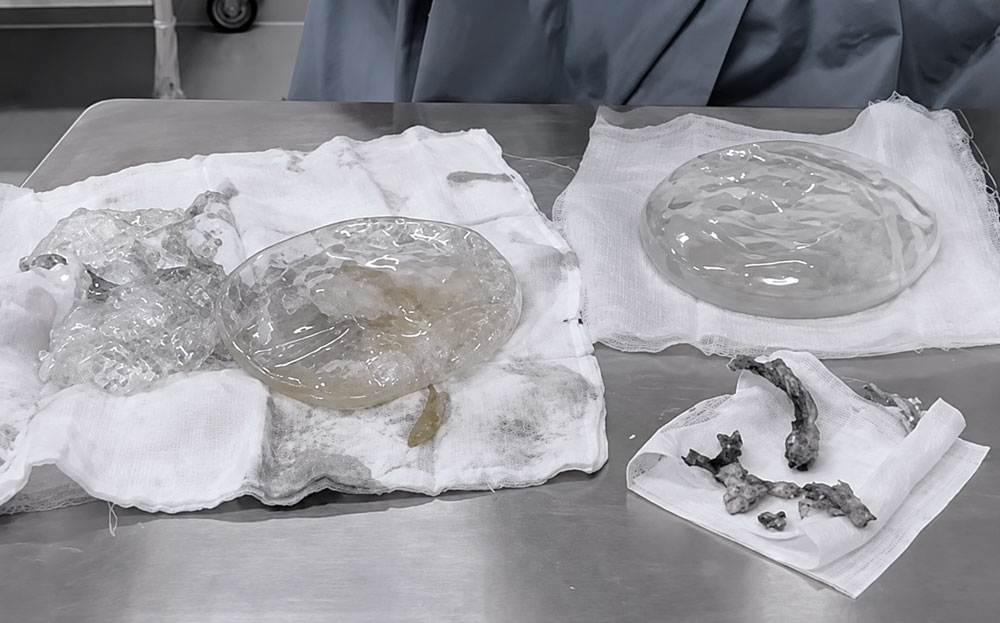
A silicone rupture can occur due to deterioration over time (typically more than 15-20 years) or a severe accident involving the chest. The good news is that a silicone rupture is not life-threatening. Modern silicones use Cohesive Gel technology, which is highly cohesive and does not flow like water. When the shell tears, the gel remains in a cohesive lump within the tissue capsule created by the body (Silent Rupture), without leaking into the bloodstream or surrounding tissues.
What to Do if You Suspect an Implant Rupture:
- ✔️ Observe Symptoms: The breast size might decrease, shape may change, a lumpy mass may be felt, or there might be sharp pain.
- ✔️ Diagnosis: It can be detected with an MRI or a breast ultrasound.
- ✔️ Treatment: There is no need to panic or require immediate emergency surgery. However, you should schedule an appointment with a surgeon to remove the old silicone and the capsule, and a new implant can be inserted at the same time.
3. What is BIA-ALCL? Is the Risk of Cancer from Breast Augmentation Real?
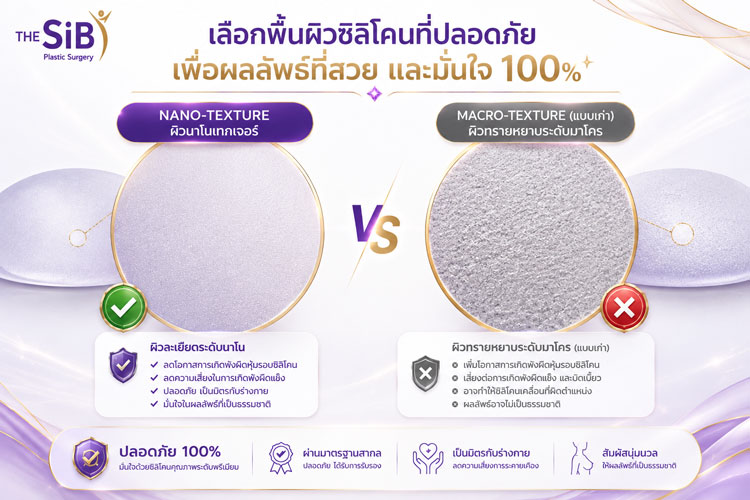
BIA-ALCL (Breast Implant-Associated Anaplastic Large Cell Lymphoma) is not breast cancer, but an extremely rare type of immune system cancer (lymphoma) that occurs in the fluid surrounding the tissue capsule enclosing the implant. According to reports from the World Health Organization (WHO) and the FDA, this condition is associated with the use of Macro-textured Implants, which have currently been suspended from production and recalled from the market.
- Current Risk: If you augment your breasts with “Smooth Implants” or “Nano-textured Implants”, the risk of developing BIA-ALCL is considered close to zero.
- Symptoms to Watch For: If, several years after augmentation, one breast suddenly and rapidly swells (due to fluid accumulation), you should see a doctor immediately.
- Treatment: If detected in the early stages, it can be cured almost 100% simply by surgically removing the implant and the entire capsule (En bloc resection) without the need for chemotherapy.
Is Breast Augmentation Dangerous? Why Does Augmenting at The SiB Reduce Risks?
At The SiB Clinic, we believe that “prevention” is more important than correction. All the aforementioned risks can be managed through strict medical standards by Dr. Darin Muangthai, a Specialized Plastic Surgeon who prioritizes the highest level of safety at every step.
- A True Specialized Plastic Surgeon: Dr. Darin understands anatomy and breast base calculation. She does not force oversized implants that exceed the anatomy, which is the root cause of tissue tearing and symmastia.
- Sterile Operating Room (Positive Pressure): Prevents dust and bacteria from falling into the wound, breaking the Biofilm cycle that leads to severe capsular contracture.
- No-Touch and Bloodless Techniques: Uses meticulous hemostasis techniques and carefully inserts the silicone, minimizing tissue trauma and resulting in very little swelling and bruising.
- 1:1 Anesthesiologist Care: General anesthesia is controlled by a specialized doctor, preventing risks from allergic reactions or respiratory suppression throughout the surgery.
- Authentic Silicones with Serial Numbers: We exclusively use world-class brands (e.g., Motiva, Mentor) with smooth or nano-textured surfaces. They are unboxed brand new in front of you, eliminating the risk of BIA-ALCL associated with older textured silicones.
Conclusion & Recommendations
Knowledge is the best shield against fear. Breast augmentation is not scary and is not dangerous if you choose the right clinic and doctor. Capsular contracture, implant ruptures, or BIA-ALCL can all be prevented (High Safety ROI) with modern silicone technology and sterile surgery performed by a specialized plastic surgeon.
Our Recommendation for You: If you still have concerns, we recommend booking a consultation with Dr. Darin Muangthai at The SiB Clinic in advance. The doctor will transparently explain the surgical process, allow you to touch the real silicones, and answer all your questions straightforwardly to ensure your maximum peace of mind before making a decision.

Frequently Asked Questions (FAQ)
Do breast implants need to be replaced every 10 years?
No, they do not. If 10 years pass and there are no complications (such as a rupture or severe capsular contracture), you do not need surgical replacement. The silicone can remain in your body for a lifetime.
Can I still get a mammogram for breast cancer screening after augmentation?
Yes, you can proceed normally. However, you should inform the radiologic technologist beforehand that you have breast implants. The technician will use specific techniques to compress the breast without affecting the silicone implant.
Does flying cause implants to rupture due to air pressure?
They are completely unrelated. Air pressure in an airplane or deep-sea diving does not cause standardized silicone implants to rupture or explode.
If I’m in a car accident and the airbag hits my chest, will the implant rupture?
Medical-grade silicone is tested to withstand very high compressive forces (can bear hundreds of kilograms of weight). If struck, the silicone usually will not rupture, but the breast tissue itself may suffer trauma instead.
Does vigorous breast massage post-surgery really prevent capsular contracture?
This is a belief from the era of older silicones. Currently, with nano or smooth surface silicones, vigorous massage is not recommended because it may tear the capsule and cause bleeding (leading to worse contracture). Simply moving them gently as directed by the doctor is sufficient.
If I have the old textured silicone implants, do I need to rush to get them removed?
The FDA does not recommend removing them if the patient has no abnormal symptoms (like acute swelling). Simply checking your breasts regularly and getting an annual ultrasound is enough.
Is it true that each person’s body creates a different amount of scar capsule?
Yes, it’s true. Genetics and individual immune systems affect capsule formation. People prone to keloids may create more scar tissue than normal. The doctor will consider prescribing medication to reduce capsule formation.
Is Symmastia (uniboob) dangerous?
It is not life-threatening, but it distorts the breast shape and looks unappealing (silicones flow together in the center). It is caused by the doctor dissecting the breast pocket too closely together. It must be corrected with surgery to repair the pocket.
Do smoking and drinking alcohol affect the dangers after breast augmentation?
They have a significant effect. Smoking constricts blood vessels, risking breast tissue death (Necrosis) and slow wound healing. Alcohol makes bleeding easier, risking hematoma. You must strictly abstain as instructed by the doctor.
Is there a fee for a safety consultation at The SiB Clinic?
There is no charge for an initial consultation. The clinic gladly provides safety information and answers all questions transparently. You can message us to inquire and book an appointment.


Considering cosmetic surgery in Thailand at The SiB Plastic Surgery?
Inquire or schedule a free consultation with our doctor.
 Whatsapp
  หน้าแรก
  โปรโมชั่น
  สอบถาม
  จองคิวฟรี