

 ไทย
ไทย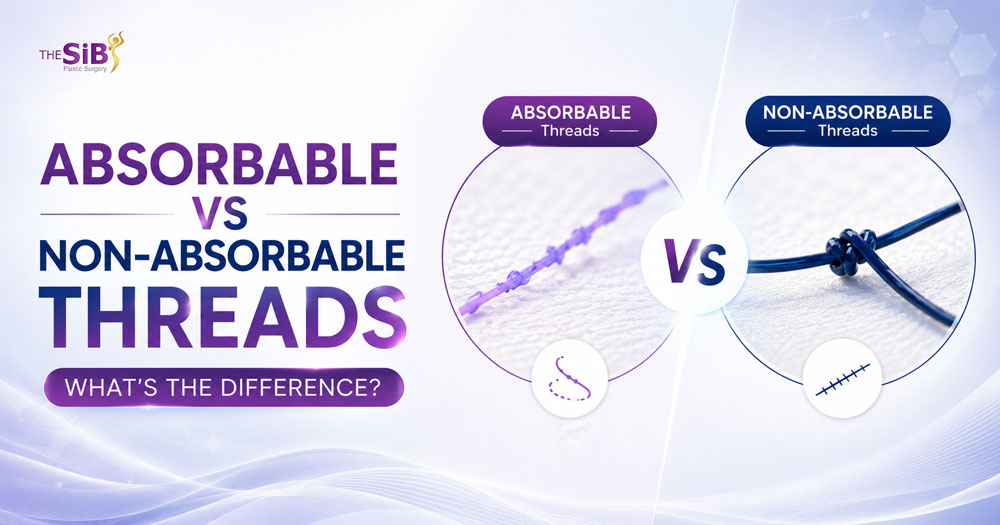
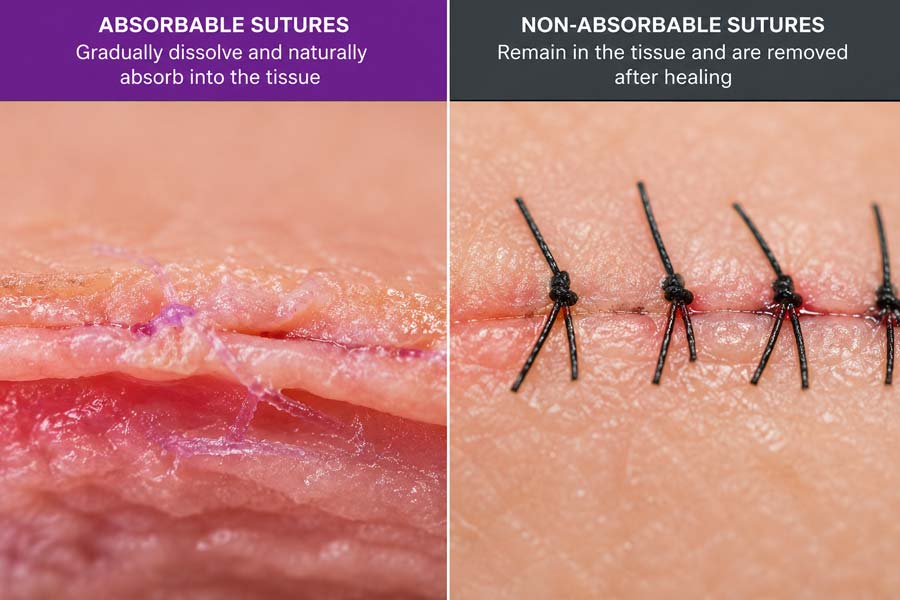
The main difference between absorbable and non-absorbable sutures lies in the degradation process of the material and the necessity for suture removal. Absorbable Sutures are materials that the body can naturally break down and absorb within 7-90 days, suitable for internal surgical wounds, oral wounds, or cosmetic surgery wounds where the knots need to be hidden. Meanwhile, non-absorbable sutures are made from highly durable materials that the body cannot break down on its own. Therefore, you must return to see the doctor to have the sutures removed once the wound has healed well (usually taking 7-14 days). They are suitable for external wounds, accident wounds, or wounds in areas with high movement and tension. The doctor will consider and select the most appropriate type for each individual’s wound condition to ensure utmost safety and the most beautiful results.
Key Takeaways
- Absorbable Sutures: Broken down naturally by the body. No removal needed, reducing pain. Ideal for internal wounds, oral wounds, and hidden subdermal stitches.
- Non-absorbable Sutures: Extremely strong and highly resistant to tension. Requires a scheduled return for suture removal. Suitable for accident wounds or general external wounds.
- Aesthetic Results: This does not depend solely on the type of suture used, but also on wound cleanliness, location, and the specialized doctor’s technique in hiding the knots.
- Important Note: You should strictly follow the doctor’s wound care instructions to prevent infection, which is the leading cause of thick scarring or keloids.
| Comparison Criteria | Absorbable Sutures | Non-absorbable Sutures |
|---|---|---|
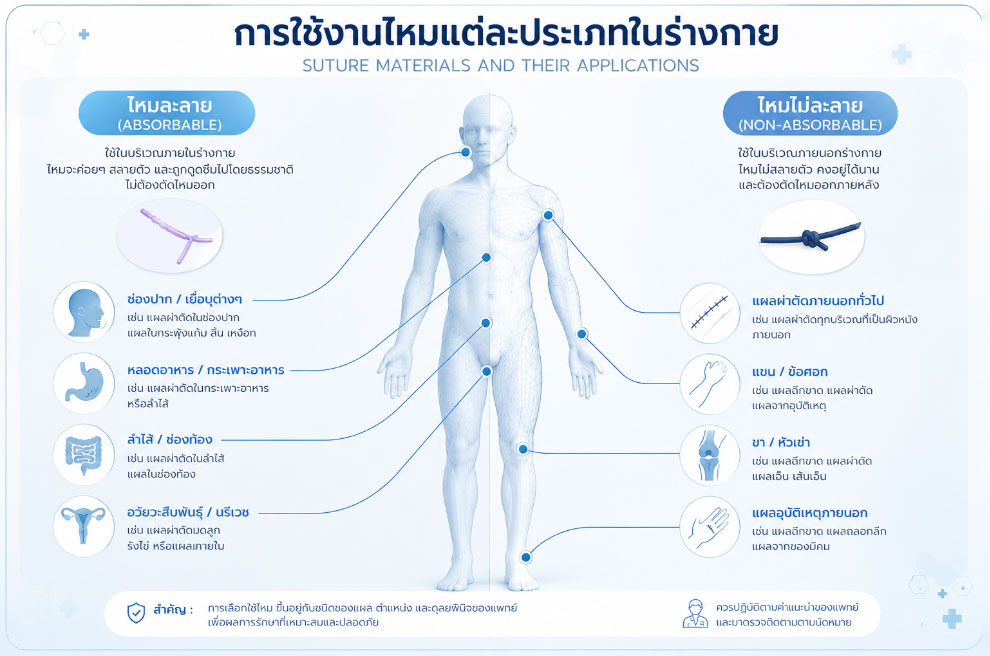
| Suitable Wound Types | Internal surgical wounds, oral wounds, subcutaneous cosmetic wounds | External skin wounds, general accident wounds, joint areas with high tension |
| Need for Suture Removal | No removal needed (material breaks down naturally) | Must return to the doctor for suture removal |
| Recovery / Degradation Time | Begins breaking down from 7-90 days (depending on the material) | Scheduled for removal within 7-14 days after suturing |
| Key Advantages | Convenient, prevents additional pain from suture removal | Extremely strong and durable, wounds do not easily split open during movement |
| Precautions | May cause tissue inflammation in patients allergic to certain materials | If forgotten or left in too long, it can cause inflammation and keloids |
Absorbable Sutures: The Suture Innovation That Doesn’t Require Removal
Absorbable sutures are medical sutures that the body can naturally break down and absorb back into the system. The strength of the suture thread will gradually decrease until it completely disappears within 7 to 90 days. This provides convenience for patients, as they do not need to return to the doctor for later removal. They are commonly used in hard-to-reach stitches or internal body tissues.
Materials used to produce absorbable sutures include synthetic options like Polyglycolic acid (PGA), Polydioxanone (PDS), and natural materials like Catgut, which is made from the intestinal tissue layers of animals. The speed of dissolution depends on the type of material and each patient’s physical condition.
- Advantages of Absorbable Sutures: Helps reduce pain and travel expenses for suture removal. It is especially ideal for wounds in hard-to-reach or delicate areas, such as the oral cavity, uterus, or internal organs. It also reduces the risk of introducing new pathogens into the wound from reopening it for suture removal.
- Limitations of Absorbable Sutures: The tensile strength gradually drops rapidly over time, making it unsuitable for external wounds that require long-term tension. In some patients, a reaction against the material may occur, causing minor inflammation in the surrounding tissues.
Non-absorbable Sutures: Maximum Strength for External Skin Wounds
Non-absorbable sutures are made from highly permanent and durable materials. The human body cannot naturally break down or absorb the structure of this thread. Therefore, once the wound has completely healed, patients must return to the doctor as scheduled to have these sutures removed. They are typically used on the outermost layer of skin that constantly faces tension and movement.
Popular materials used for non-absorbable sutures include Nylon, Prolene, Silk, or even medical-grade Stainless Steel. These materials are known for being tough, not easily torn, and having a very smooth surface.
- Advantages of Non-absorbable Sutures: Highly strong and extremely resistant to long-term tension. They effectively hold together slow-healing wound edges or wounds on frequently moving joints, preventing them from prematurely splitting apart.
- Limitations of Non-absorbable Sutures: Patients must take the time to return and may feel slight tension or pain during the removal process. If left in for too long or forgotten, the thread becomes a foreign object that triggers complications, such as infected wounds, pus, or the formation of thick, hard-to-treat keloid scars.
Clear Comparison: How Do Absorbable vs. Non-absorbable Sutures Differ?
Choosing to use each type of suture involves entirely different properties. To provide a clear and easy-to-understand picture for medical applications, the key differences can be compared in the table below.
| Properties | Absorbable Sutures | Non-absorbable Sutures |
|---|---|---|
| Body Degradation | The body can absorb and break it down naturally | Does not break down; remains permanently until removed |
| Strength & Durability | Gradually decreases according to the dissolution time | Maintains high strength throughout the suturing period |
| Tissue Reaction | Chance of inflammation from the breakdown process | Significantly fewer tissue reactions |
| Common Usage Areas | Internal tissues, oral cavity, under the skin | Outer skin layers, accident wounds, tendons |
| Primary Treatment Goal | Focuses on convenience and hiding internal scars | Focuses on strength, preventing external wound splitting |
Why Don’t Doctors Use Absorbable Sutures for Every Wound? Revealing the Doctor’s Criteria
Doctors cannot use absorbable sutures for every type of wound on the body because the characteristics and conditions of each wound require different treatments. The choice of suture type requires careful medical assessment, based on the following criteria:
- General Skin Wounds and Accident Wounds: Accident wounds, such as lacerations, bite wounds, or split wounds, are usually unclean and carry a high risk of infection. If a doctor uses an absorbable suture and buries the knot under the skin, that knot can become a breeding ground for pathogens, leading to severe wound infections. Therefore, doctors prefer non-absorbable sutures like black silk or Nylon to stitch from the outside because they are tough, easy to clean, and safer.
- Clean Surgical Wounds Requiring Aesthetics: In cases of surgeries performed in sterile operating rooms, such as cosmetic surgery, C-section wounds, or thyroid surgery wounds, doctors can use the technique of hiding the knot under the skin with absorbable sutures. Because the wound is very clean and smooth, this helps the wound edges close perfectly without leaving a “centipede” stitch mark on the outside.
- Wounds in Hard-to-Remove Areas: Some wounds can cause great difficulty and pain during suture removal if non-absorbable sutures are used, such as episiotomy wounds from vaginal childbirth, surgical wounds in young children, tongue wounds, inner cheek wounds, or eye wounds. In these areas, doctors will exclusively use absorbable sutures for the patient’s convenience and safety.
- Pre-existing Severely Infected Wounds: For example, a ruptured appendix wound. Doctors will choose non-absorbable sutures to loosely stitch the outer skin so they can easily observe if pus or secretions leak out, allowing for easier drainage of impurities from the wound.
- Torn Tendon or Muscle Wounds: These tissue groups require massive anchoring force and take a relatively long time to heal. Doctors will select a very slow-dissolving absorbable suture (such as Chromic catgut) or, in some cases requiring permanent strength, may need to bury a non-absorbable suture internally to ensure the tendons attach securely.
Conclusion and Advice from Medical Specialists
Both absorbable and non-absorbable sutures are specifically designed to function and address distinctly different wound types. If a doctor chooses to use a non-absorbable suture for your wound, it doesn’t mean your wound will look less beautiful or inferior to using an absorbable suture. Instead, it is a decision based on safety, wound strength, and the most effective infection prevention.
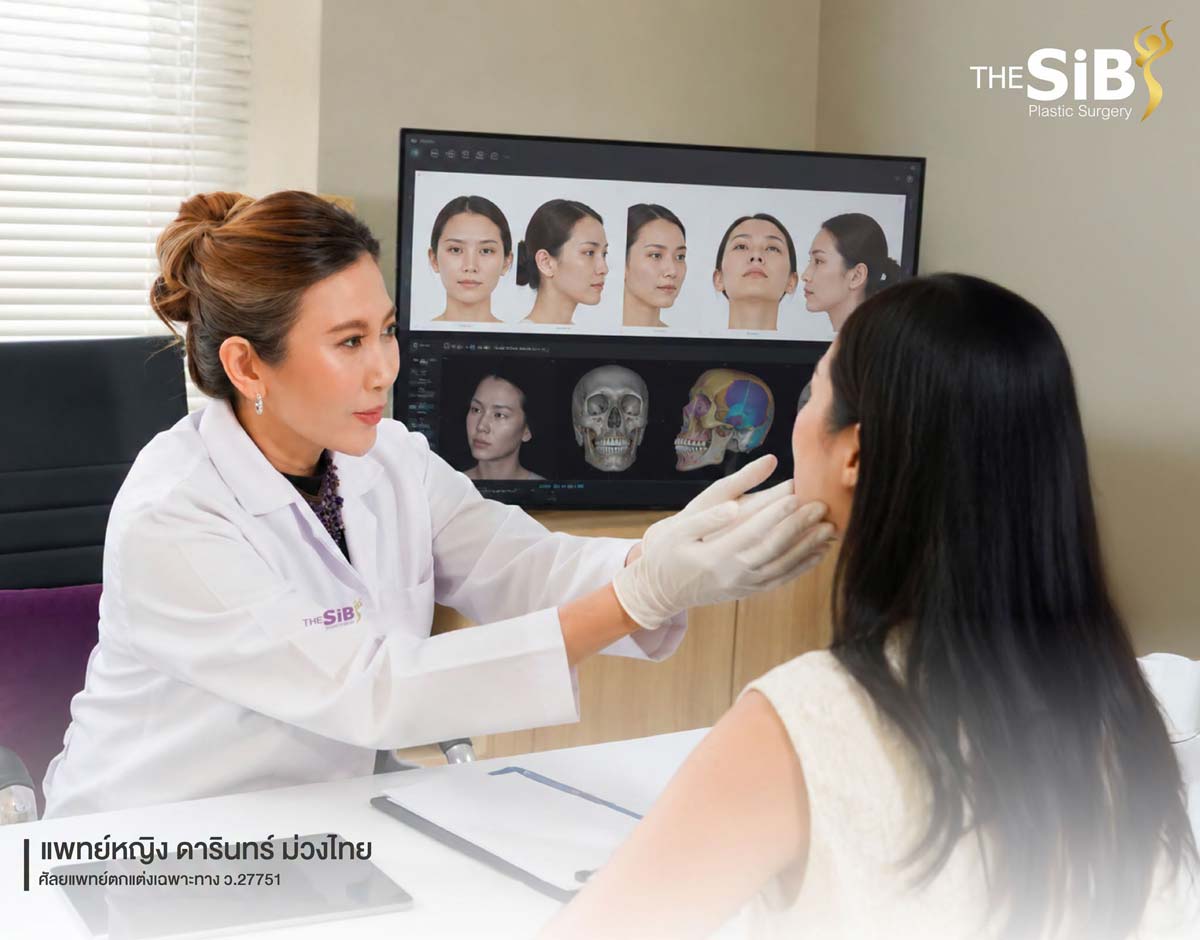
The most crucial factor in helping wounds heal beautifully without pesky scars is maintaining cleanliness and strictly following the doctor’s instructions. If you have concerns about scarring after stitches, or are planning cosmetic surgery that requires meticulousness and seamless scar hiding, you can consult with our team of specialized medical experts at The SiB Clinic. We are ready to take care of you and design the best treatment for your confidence.
Frequently Asked Questions About Suturing (FAQ)
1. Which type of suture is most popular for facial cosmetic surgery?
Answer: Doctors usually use a combined technique. In the fat or subcutaneous layer, absorbable sutures are used to secure the structure and hide the knots. For the outermost visible skin, doctors often choose ultra-fine non-absorbable sutures (like Nylon 6-0 or 7-0) for meticulous stitching to ensure the smoothest wound edges. The patient is then scheduled for a quick suture removal within 5-7 days to prevent scarring.
2. Is it true that absorbable sutures can just be left alone without doing anything?
Answer: Yes, it’s true. The body uses natural processes to break down and absorb the thread until it dissolves. The knot will gradually fall off or dissolve without you needing to return to the doctor to have it removed.
3. What are the dangers of forgetting to remove non-absorbable sutures and leaving them in for too long?
Answer: It can be dangerous. The body will treat the non-absorbable suture as a foreign object, leading to chronic tissue inflammation. The area around the wound will become red, swollen, and purulent, and tissues will grow over the thread. This makes later removal very painful and leaves an ugly, thick raised scar.
4. If I notice an absorbable suture thread poking out of the skin after stitching, should I pull it out myself?
Answer: Absolutely do not pull it or use scissors to cut it yourself. Pulling might cause the thread to tug on internal tissues, tearing the wound or introducing pathogens under the skin. If a thread is poking out and causing irritation, you should promptly see a doctor so they can safely trim it with sterile tools.
5. Why shouldn’t absorbable sutures be used to stitch the outer skin of road accident wounds?
Answer: Because accident wounds are highly contaminated with dust, dirt, and pathogens. Using absorbable sutures, which requires burying knots under the skin, turns them into habitats for bacteria, causing internal purulent infections. Doctors must use non-absorbable sutures stitched from the outside so the wound can drain secretions well and is easier to clean.
6. How does the degradation process of absorbable sutures happen in the body?
Answer: If it is a natural absorbable suture (Catgut), the body will use enzymes to break it down. If it is a synthetic absorbable suture (like PGA, PDS), the body uses hydrolysis (using water in the cells) to break the chemical bonds of the thread until it naturally dissolves.
7. What causes itching around a stitched wound, and can I scratch it?
Answer: The itchiness is caused by the body’s natural mechanism of repairing skin and creating new tissues, as well as the sprouting of capillaries. Absolutely do not scratch, pick, or peel the scabs, as this will cause the wound to split and re-inflame. It is recommended to gently apply a clean cloth soaked in cold water to relieve the itching.
8. Is the suture removal process very painful, and how long does it take?
Answer: Suture removal is very minimally painful. The sensation is similar to an ant bite or a slight tingling tension. The doctor or nurse will use specialized suture scissors to cut the thread and pull it out quickly. Generally, the entire process takes only 2-5 minutes.


Considering cosmetic surgery in Thailand at The SiB Plastic Surgery?
Inquire or schedule a free consultation with our doctor.
 Whatsapp
  หน้าแรก
  โปรโมชั่น
  สอบถาม
  จองคิวฟรี