

 ไทย
ไทย
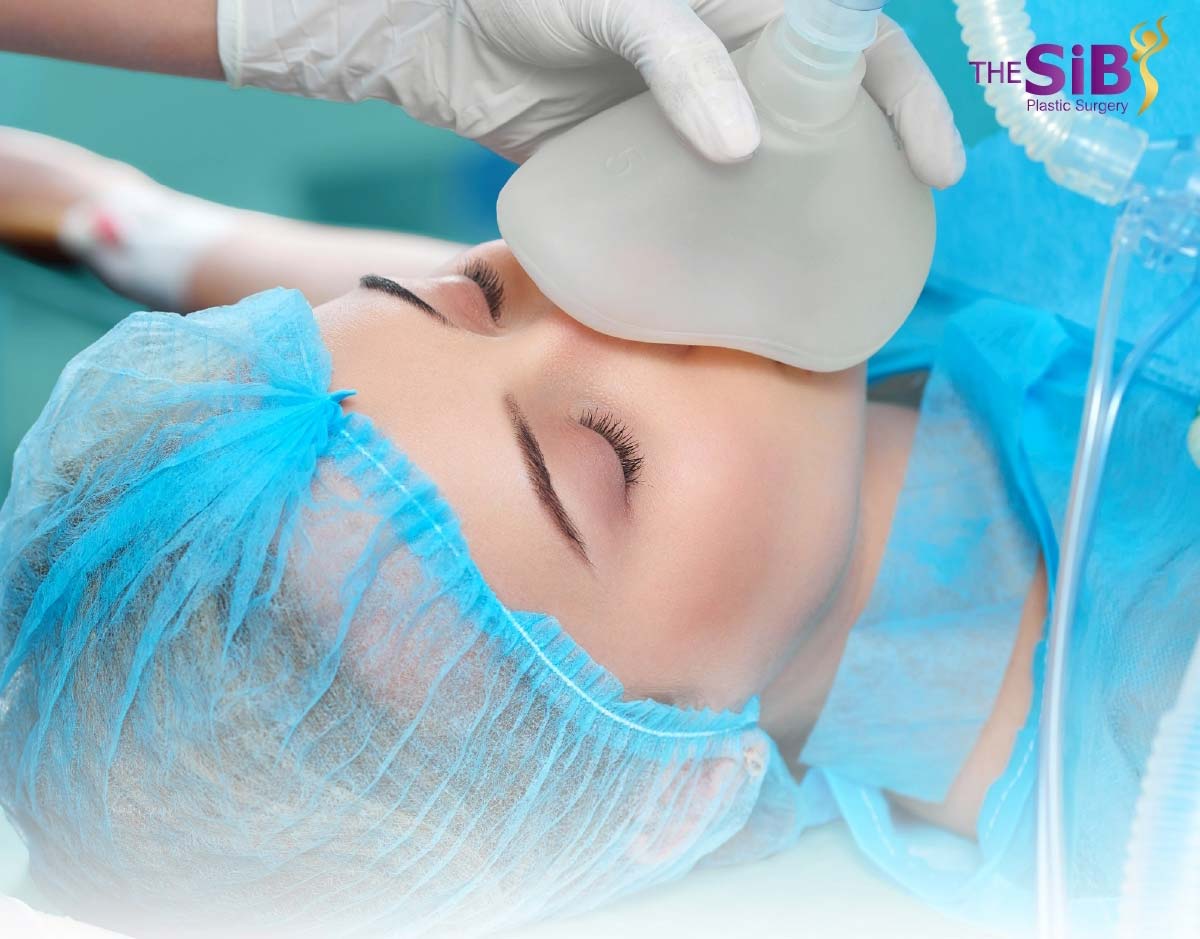
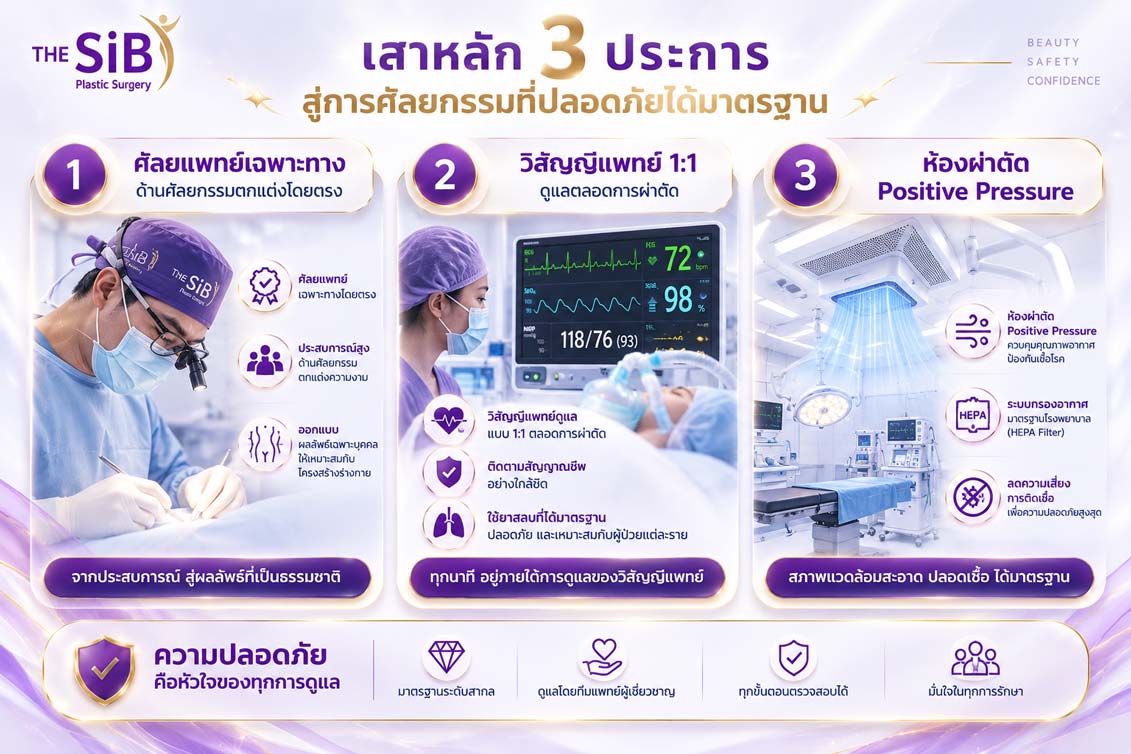
An Anesthesiologist is the most critical missing puzzle piece responsible for safeguarding the “life and breath” of patients throughout their surgery. The “1:1” care model means that one specialized anesthesiologist is dedicated exclusively to monitoring the vital signs and controlling the depth of anesthesia for just one patient. They will never leave the operating room or handle simultaneous cases. This allows the plastic surgeon to fully concentrate on suturing and contouring aesthetic structures. Choosing a medical facility that provides 1:1 anesthesiologist care is a fundamental safety standard that patients should never overlook.
Key Takeaways
- Who this article is for: Individuals planning a cosmetic surgery that requires general anesthesia (e.g., facelift, breast augmentation, tummy tuck, or open rhinoplasty) who want to understand the safety protocols.
- Pros and limitations: The main advantage is advanced safety; patients sleep comfortably, feel no pain, and recover smoothly. The limitation is that clinics offering 1:1 specialized anesthesiologist care may have higher surgery costs (package prices) than general clinics without these specialists.
- Duty timeframe: The anesthesiologist cares for you from the pre-operative health assessment (Pre-op), throughout the active monitoring in the operating room, and continues to track your condition until you are fully awake and alert in the Recovery Room.
- What to know before deciding: You should not consent to surgery if a facility uses a “nurse” to administer anesthesia without the supervision of an anesthesiologist, or if the “surgeon” is simultaneously administering anesthesia and operating.
| Roles & Responsibilities | Plastic Surgeon | Specialized Anesthesiologist |
|---|---|---|
| Main Focus | Aesthetic structure, scarring, and surgical results | Vital signs, safety, and pain management |
| Duration of Care | From incision to the final suturing process | From before sleeping, during sleep, until full recovery and waking |
| Emergency Management | Assesses the wound and blood loss | Manages the airway, blood pressure, and resuscitation |
| Consultation Role | Assesses sagging/breast anatomy | Assesses physical readiness, underlying diseases, and regular medications |
| Significance | The Artist | The Guardian |
1. Who is an Anesthesiologist? How are they different from a nurse?
There is a common misconception that anyone can administer anesthesia. In reality, an “Anesthesiologist” is a doctor who has completed a medical degree (6 years) and pursued an additional 3-4 years of specialized residency in anesthesiology. This makes them experts in the respiratory system, cardiovascular system, and the pharmacology of anesthetic drugs.
- Difference from a Nurse Anesthetist: A nurse anesthetist is a nurse trained to be an “assistant” to the anesthesiologist. Under the highest safety standards, a nurse anesthetist should not administer general anesthesia to a patient alone without the supervision and control of a specialized anesthesiologist.
- Specialized Expertise: Anesthesiologists have the capability to accurately calculate medication doses tailored to the specific weight, age, and liver/kidney function of each individual patient. This ensures smooth sedation and waking up with minimal side effects.
2. Why is “1-to-1” monitoring throughout the surgery necessary?
When the human body is under general anesthesia, it loses control over certain fundamental mechanisms, such as breathing and maintaining blood pressure. Having an anesthesiologist monitor you 1:1 means that this doctor will never step out of the operating room or take on another overlapping anesthesia case.
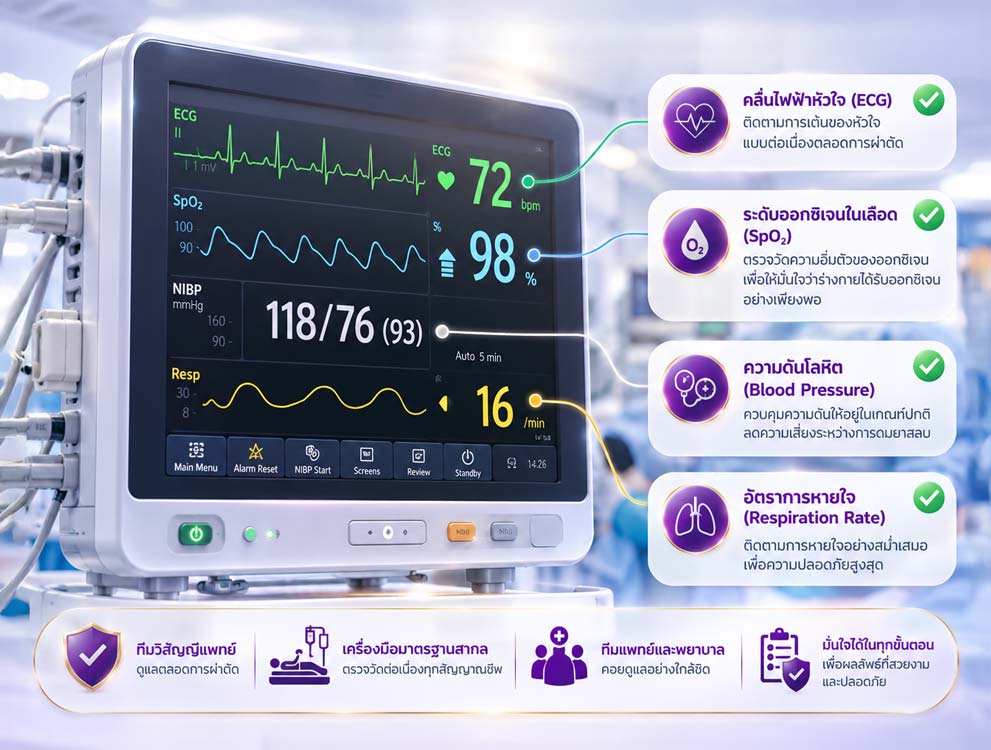
- ✔️ Second-by-Second Monitoring: The anesthesiologist will focus on the monitor screen to watch your heart rate, blood oxygen levels (SpO2), and blood pressure. If any number deviates even slightly, the doctor can immediately adjust medication levels or provide fluids to correct it before any danger arises.
- ✔️ Controlling the Depth of Sleep: If the anesthesia is too light, the patient might twitch, move, or wake up midway. If it’s too deep, it can depress breathing. A 1:1 anesthesiologist constantly balances the anesthesia level with the surgeon’s operational steps.
- ✔️ Surgeons Work at Maximum Efficiency: When surgeons are confident that an expert is managing the back-end systems (vital signs), they can fully concentrate on the precision of their incisions and hidden suturing techniques.
3. The Dangers of “Surgeon-directed anesthesia” or Lacking an Anesthesiologist
Saving costs by having the surgeon administer the anesthesia while simultaneously performing the surgery (Surgeon-directed anesthesia) exponentially increases the risk to the patient. Humans simply cannot focus on two highly delicate and critical tasks at the same time.
- 🚫 Airway Risks: If the patient stops breathing or experiences an airway obstruction, a surgeon actively dissecting fascia or inserting an implant cannot immediately drop their tools to perform intubation in time.
- 🚫 Risk of Shock: Blood loss during surgery can cause blood pressure to drop. Without an anesthesiologist constantly evaluating the need for blood or fluid replacement, it can lead to a dangerous state of shock.
- 🚫 Delayed Emergency Response: In a surgical emergency, every second counts. Having a 1:1 anesthesiologist stationed guarantees that if the unexpected happens, a specialist is ready to respond and manage the crisis within fractions of a second.
4. Positive Pressure Operating Rooms: A Crucial Assistant for the Anesthesiologist
In addition to having a skilled anesthesiologist, the “facility” itself must meet strict standards. A proper operating room must have an air pressure control system and fully equipped machinery to support anesthesia administration.
- Positive Pressure System: Controls air pressure to actively push external air and dust outward whenever doors are opened. This significantly reduces the risk of infection in both the surgical wound and the respiratory system.
- Standard Anesthesia Machines and Resuscitation Equipment: Standardized clinics invest in high-tech anesthesia machines, defibrillators, and a complete stock of emergency medications, allowing the anesthesiologist to work seamlessly.
5. Our Commitment to Anesthesiology at The SiB Clinic
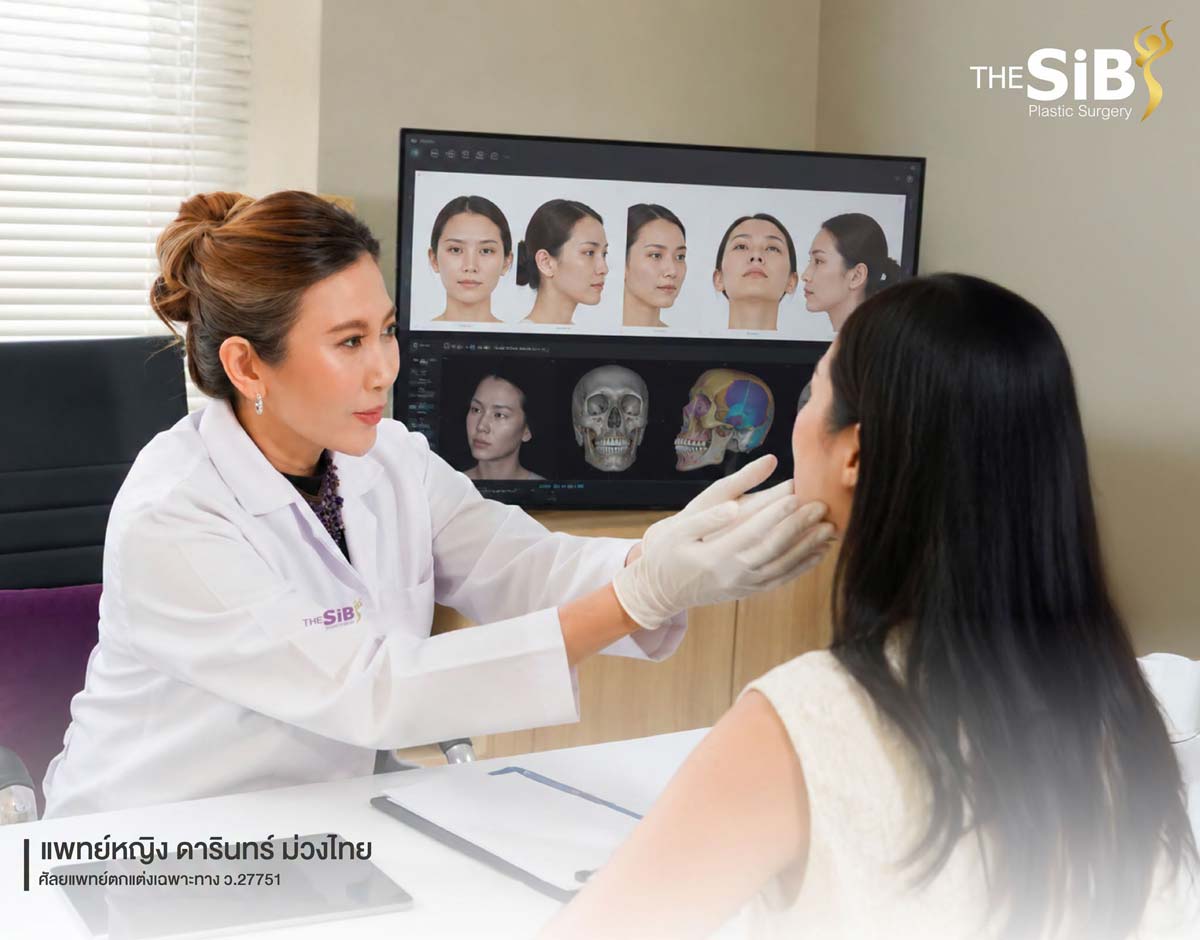
At The SiB Clinic, led by Dr. Darin Muangthai, we firmly uphold the philosophy that “Beauty must come hand-in-hand with safety.” Every surgical case requiring general anesthesia receives rigorous care and monitoring.
- Pre-operative Assessment: Patients will meet and talk with the anesthesiologist prior to the surgery date to discuss their medical history, drug allergies, snoring history, or any airway issues, allowing us to plan the safest medication protocol.
- A True Specialized 1:1 Anesthesiologist: The clinic exclusively utilizes Board-Certified anesthesiologists who provide dedicated 1:1 care throughout the surgery. We never substitute nurses to administer anesthesia.
- Wake Up Refreshed, Reduce Nausea (PONV Management): The anesthesia technique at The SiB Clinic incorporates medications to prevent post-operative nausea and vomiting (PONV). This ensures patients wake up feeling relaxed, without severe dizziness, and ready for recovery.
Conclusion & Recommendations
Perfect beauty must be built on a foundation of safety. Having a “1:1 anesthesiologist” in the operating room is not an optional extra; it is a “Necessity” that reflects the responsibility and high standards of a cosmetic surgery clinic. Choosing to invest in a facility that fully prioritizes its medical staff is a decision that safeguards both your image and your health simultaneously.
Our Recommendation for You: Before deciding on any surgery requiring general anesthesia, always ask the clinic: “Who will be administering my anesthesia?” We encourage you to book an appointment to discuss and experience the standard of care provided by Dr. Darin Muangthai at The SiB Clinic, ensuring your complete peace of mind and maximum confidence before undergoing surgery.
Frequently Asked Questions (FAQ)
Why do some clinics use local anesthesia instead of general anesthesia for major surgeries?
Some clinics may try to avoid general anesthesia to cut the costs of hiring an anesthesiologist. However, for major surgeries (like breast augmentation or tummy tucks), using local anesthesia alone may not provide deep enough pain relief. This can cause the patient to feel frightened or move during the procedure, which is highly dangerous.
How many hours must I fast before general anesthesia?
The anesthesiologist will instruct you to fast (NPO) from all food and liquids for at least 8 hours prior to surgery. This prevents food particles or gastric juices from flowing backward into your trachea and lungs while you sleep.
Can I wake up in the middle of surgery (Anesthesia Awareness)?
The chances of this happening are incredibly low if you have a specialized 1:1 anesthesiologist monitoring you. They continuously track the depth of your sleep via your vital signs and adjust the medication levels accordingly.
Why does my throat hurt after general anesthesia?
For maximum safety in controlling your breathing, the anesthesiologist will insert an endotracheal tube down your throat while you are asleep. This might cause slight irritation and a sore throat after waking up. These symptoms usually resolve on their own within 1-3 days.
I have a Latex Allergy; can I still undergo general anesthesia?
Yes, you can. However, you MUST strictly inform the anesthesiologist in advance. This allows the medical team to prepare latex-free equipment and gloves specifically for your case.
I’m afraid of waking up very dizzy and vomiting heavily. Can this be prevented?
The anesthesiologist can assess your risk and proactively administer anti-emetic medications while you are under anesthesia. This is highly effective in reducing post-operative nausea and vomiting (PONV).
What should I do if I have underlying conditions like high blood pressure or diabetes?
You must inform the doctor every time. The anesthesiologist will request your blood test results and may have you adjust certain medications prior to the surgery date. As long as your conditions are controlled and within normal limits, you can undergo general anesthesia safely.
How long will the anesthesiologist stay with me?
The anesthesiologist will remain in the operating room with you at all times. They will continue to provide care until you are transferred to the Recovery Room and they are fully satisfied that you are breathing well on your own and waking up safely.
Does open rhinoplasty surgery require general anesthesia?
Doctors generally recommend general anesthesia. Because the open technique involves deep structural adjustments and takes a long time, general anesthesia ensures the patient feels no pain, doesn’t flinch, and allows the surgeon to work with maximum detail and precision.
What is the procedure for meeting the anesthesiologist before surgery at The SiB Clinic?
The clinic will arrange for you to fill out a detailed health history form, undergo a preliminary physical examination, and have a consultation with the medical team to ensure you are fully prepared and maximally confident before the actual surgery date.


Considering cosmetic surgery in Thailand at The SiB Plastic Surgery?
Inquire or schedule a free consultation with our doctor.
 Whatsapp
  หน้าแรก
  โปรโมชั่น
  สอบถาม
  จองคิวฟรี