

 English
A Real Patient Case Study Medical Insight and Everything You Should Know Before Deciding to Revise Your Nose
Revision rhinoplasty is never a casual decision. It is not about “making the nose higher” or “changing the shape a little ” For many patients, revision surgery is the final step after years of disappointment when the nose no longer looks natural, feels unstable, or simply does not belong to the face anymore.
This article brings together a real patient review, the doctor’s medical assessment, and practical preparation advice before and after revision surgery, all based on a real case treated at The SIB Plastic Surgery
The Patient’s Story “I Didn’t Want a New Nose I Wanted an Ending”
“I’ve had my nose done more than once.
Every time, I told myself this would be the last.
But the problems always came back drooping tip stiff bridge, uneven shape.
I wasn’t chasing beauty anymore. I just wanted it to stop ”
This patient came in not asking for a trendy nose shape
She came in asking one question:
“Can this be fixed properly once and for all?”
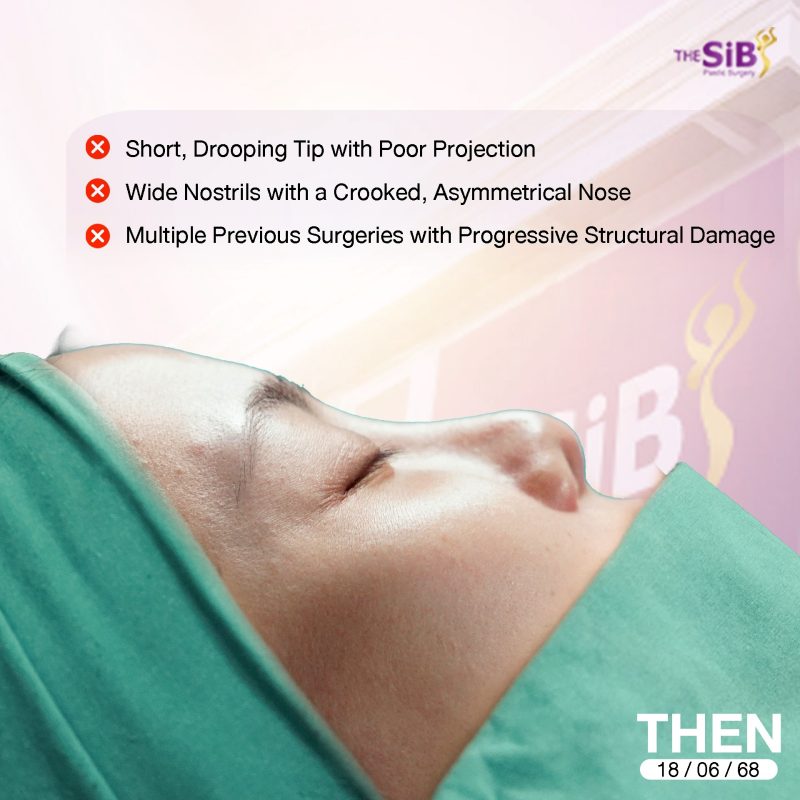
Common Problems Seen in Revision Rhinoplasty Cases
From both the patient’s experience and medical evaluation, the main issues included:
- Weak nasal tip support causing drooping over time
- Unstable internal structure from previous surgeries
- An overly rigid bridge that looked unnatural
- Facial imbalance, especially visible from side and oblique angles
These are structural problems, not surface-level issues and they cannot be solved by simply adding more material
Before the Consultation: What Patients Should Prepare
Based on this real case, preparation before revision rhinoplasty is crucial. Patients are advised to:
- Gather full surgical history (how many surgeries, what materials were used)
- Bring before-and-after photos from previous procedures
- Clearly identify discomfort or concerns (tightness, pain, stiffness, instability)
- Be honest about expectations focusing on what is realistic and safe
“What impressed me most was that the doctor didn’t ask what nose I wanted.
He asked what problems I was living with.”

Doctor Assessment: Looking Beyond the Shape
At The SIB, the evaluation focused on structural integrity, not aesthetics alone.
After a thorough examination, the doctor explained:
- The existing nasal tip structure could no longer support additional weight
- Previous materials limited what could be safely corrected
- Further conventional augmentation would likely cause recurrence of problems
Medical Recommendation
The surgical plan proposed was:
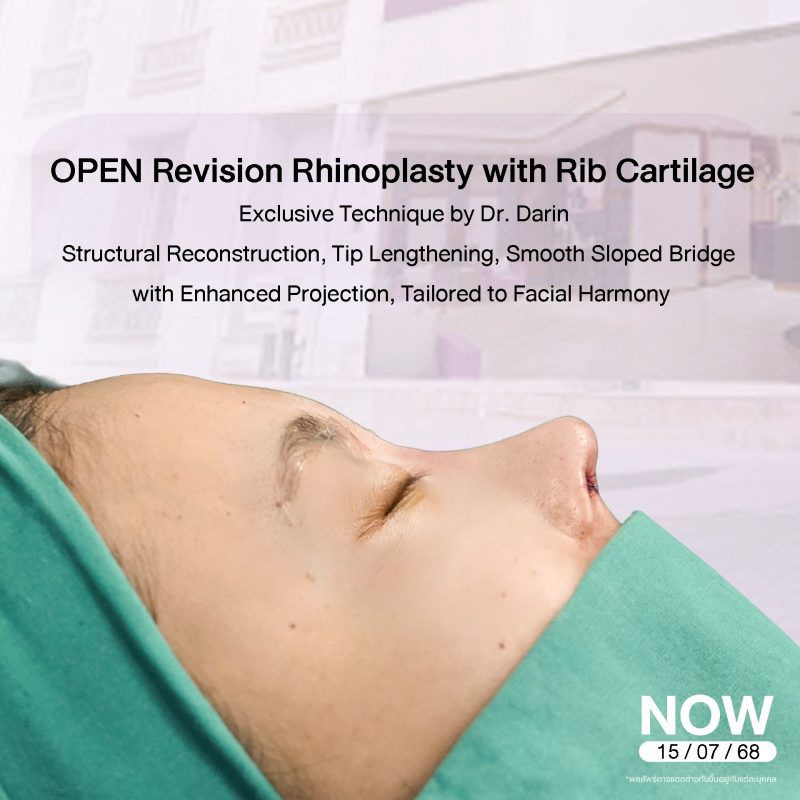
Open Rhinoplasty with Autologous Rib Cartilage
This approach allows the surgeon to:
- Fully visualize and assess internal nasal structures
- Remove or correct problematic previous work
- Rebuild a strong, stable foundation from the inside out
- Design a nose that is structurally sound and facially balanced
“The doctor explained everything — including limitations.
For the first time, I felt someone was planning for my future, not just the result.”
Why Rib Cartilage Is Critical in Revision Cases
In complex revision rhinoplasty, local nasal cartilage is often insufficient.
Rib cartilage is chosen because:
- It provides strong, long-term structural support
- It allows precise shaping and angle control
- It significantly reduces the risk of future tip collapse
- It offers stable, predictable results in difficult cases
This technique requires advanced expertise and experience — it is not suitable for routine cosmetic procedures.
Surgery Day: The Patient Experience
On the day of surgery:
- The surgical plan was reviewed again with the patient
- The medical team ensured clarity and comfort
- The patient felt reassured by the doctor’s confidence and preparation
“I wasn’t scared because I knew this wasn’t rushed.”
Recovery and Aftercare What Happens After Revision Surgery
During recovery:
- Swelling and bruising were expected but well-managed
- Follow-up appointments were scheduled consistently
- Structural stability was monitored, not just external appearance
Early observations included:
- A stable, natural-feeling nasal tip
- No excessive tightness or unnatural stiffness
- Gradual refinement of shape as swelling subsided
“For the first time, my nose felt like it belonged to my face.”
Final Results: More Than Aesthetic Improvement
Once healing progressed:
- The nose appeared softer and more natural
- Facial proportions were noticeably improved
- Most importantly, the patient regained confidence without fear of future revision
“If I could go back I would have come here from the beginning.”
Key Take away from a Real Patient
Revision rhinoplasty should never start with:
“What nose do you want?”
It should start with:
“What structure do you have and how can it be rebuilt safely?”
At The SIB, revision rhinoplasty is not about trends or shortcuts.
It is about structural correction, medical precision, and long-term results.
If you are considering revision rhinoplasty, remember:
- Proper evaluation matters more than shape
- Surgeon expertise defines long-term success
- A well-planned revision can end the cycle not repeat it
Because true beauty is not about correction.
It’s about getting it right once.


 LINE OFFICIAL
  หน้าแรก
  โปรโมชั่น
  สอบถาม
  จองคิวฟรี